
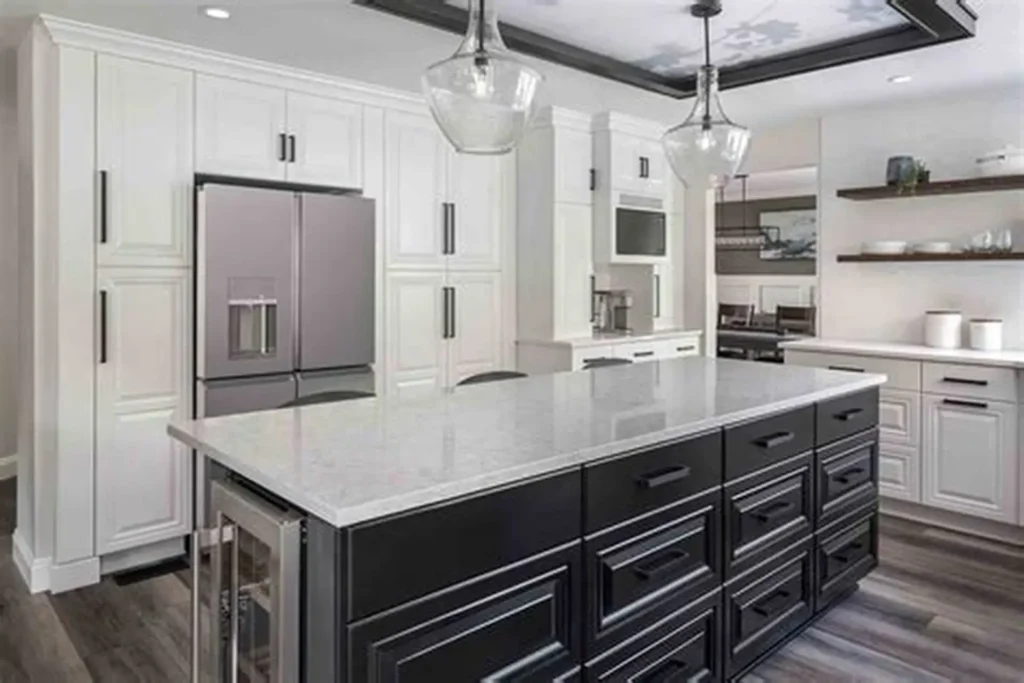
Quartz and granite share the spotlight in modern kitchens and bathrooms for good reason: both are tough, beautiful, and relatively low-maintenance. But when you’ve got quartz countertops and reach for a bottle labeled “granite cleaner,” is it safe? The short answer: yes—if it’s a pH-neutral cleaner specifically marked safe for natural stone and engineered surfaces, and it does not contain sealers, waxes, acids, or harsh solvents. This in-depth guide explains why, which ingredients to avoid, how to clean and disinfect quartz correctly, and how that care compares with granite stone.

Why the Label Matters: Granite vs. Quartz Chemistry
Engineered Quartz Isn’t Sealed—It’s Resin-Bound
Quartz countertops are an engineered stone: ~90–94% ground quartz mixed with pigments and polymer resins. Those resins make quartz non-porous and stain-resistant without a penetrating sealer. But resins can be sensitive to strong solvents, high pH/alkaline degreasers, and prolonged heat. That’s why most manufacturers recommend pH-neutral daily cleaners.
Granite Is Natural—and Usually Sealed
Granite countertops are natural igneous rock (quartz + feldspar + mica). Most granites have micro-porosity, so fabricators apply a penetrating sealer. Granite tolerates heat better than quartz, but the sealer can be degraded by acids, bleach, and strong alkalies—and some “polishes” can build up residue, especially on black granite countertops.
Bottom line: Many “granite cleaners” are mild, pH-neutral sprays that are safe for both quartz and granite. But not all granite cleaners are alike; some include sealers, waxes, citrus solvents, or polishing oils that quartz brands don’t recommend.

Can You Use Granite Cleaner on Quartz? Yes—With These Rules
The Quick Test Before Spraying
Use the granite cleaner if it’s ALL of the following:
- pH-neutral (around 7)
- Ammonia-free and bleach-free
- No added sealers/waxes (quartz doesn’t need them)
- Labeled safe for natural stone and engineered stone/quartz
Skip it on quartz if the label includes:
- “Sealer,” “enhancer,” “polish + protect,” or “wax”
- Citrus extracts, strong solvents, or heavy alkaline degreasers
- Abrasives or micro-scrubs
Related reading on what to avoid for natural stone:
• Can you use Lysol wipes on granite? → allslabs.net/can-you-use-lysol-wipes-on-granite/
• Can you use Windex on granite? → allslabs.net/can-you-use-windex-on-granite/
The Safe Routine for Quartz (That Also Works on Granite)
Daily Cleaning (5 Minutes, Streak-Free)
- Dry wipe crumbs with microfiber.
- Spritz a pH-neutral stone cleaner (or warm water + a drop of dye-free dish soap).
- Wipe in overlapping passes.
- Rinse with clean water to remove surfactant film.
- Buff dry with microfiber for that showroom glow.
Tip: On white quartz countertops, buffing avoids faint shadows or streaks. On black quartz and black granite, a distilled-water final wipe minimizes mineral spotting.
Weekly Shine (No Waxes Needed)
If you want extra pop on veined quartz countertops, use a stone-safe spray polish marketed for quartz. Avoid silicone-heavy products that can attract dust or cause smears.
Disinfecting Quartz Without Damaging the Resin
When (and How) to Disinfect
- For daily messes, routine cleaning is enough.
- After raw meat or illness, use 70% isopropyl alcohol: spray, dwell 2–3 minutes, then rinse and dry.
- Or choose a disinfectant specifically labeled safe for quartz/engineered stone.
Avoid regular use of chlorine bleach or quats not approved for stone—these can haze resins or degrade granite sealers nearby.
Spot Problems & Stain Removal on Quartz
What if You Used the Wrong Cleaner?
- Rinse thoroughly with clean water.
- Re-clean with a pH-neutral stone/quartz cleaner.
- Buff dry.
- Persistent film? Wipe with isopropyl alcohol, then rinse and dry.
Common Stains, Smart Fixes
- Food dyes/coffee/tea: A paste of baking soda + water can help on granite; for quartz, stick to a manufacturer-approved cleaner or a short dwell with isopropyl alcohol, then rinse.
- Grease: pH-neutral degreaser labeled stone-safe; avoid high-alkali.
- Hard water spots near faucets: Final wipe with distilled water and dry.
Pro move: If you’re handling heavy quartz slabs for countertops during a remodel, pros rely on specialized lifting and transport tools (see Toolrange) to protect edges and reduce on-site risk.
How Granite Care Differs (So You Don’t Mix Playbooks)
Granite Needs Sealing; Quartz Doesn’t
- Granite: Do the water drop test: if the dark ring forms in under 10 minutes, it’s time to reseal.
- Quartz: Never seal—sealants can leave a gummy film on the resin surface.
Polished vs. Honed/Leathered
- Polished granite resists stains well but shows streaks; always rinse and buff.
- Honed/leathered granite can darken from oils—stay on top of sealing and use stone-safe cleaners.
- Quartz finishes are factory-set; avoid abrasives that can alter sheen.
Quartz vs. Granite: Maintenance, Cost & Durability Snapshot
Pros & Cons for Busy Families
- Quartz (engineered stone countertops):
- Pros: Non-porous; no sealing; easy to clean; predictable patterning (great for marble look quartz countertops and Calacatta-style veining).
- Cons: Resins can discolor with prolonged heat (avoid hot pots); some solvents/strong alkalies can haze.
- Granite:
- Pros: Natural variation; excellent heat tolerance; with sealing it’s low maintenance and great for budget granite countertops depending on color/rarity.
- Cons: Needs periodic sealing; can absorb oils/wine without protection; darker colors may highlight streaks.
Cost Considerations
Quartz countertop installation cost and granite pricing vary by color, thickness, edge, region, and fabrication complexity. For granite countertop cost, exotics and thicker (3 cm) slabs trend higher; remnant pieces can reduce price for bathroom vanities. For buying options, compare local quartz countertop suppliers, granite showrooms, and wholesale yards to find affordable white options for modern kitchens.
Product Vetting: What to Check on a Granite Cleaner Before Using on Quartz
Ingredient “Red Flags” for Quartz
- Acids (vinegar, citrus oils, oxalic/citric)
- Bleach or chlorine compounds
- High-alkali degreasers (e.g., strong sodium hydroxide solutions)
- Abrasive particles
- Sealers/waxes (“shine & protect”)
- Ammonia or strong solvents (risk to resin shine)
“Green” or DIY Cleaners—Are They Safe?
- Mild dish soap + warm water is universally safe for clean quartz countertops and clean granite countertops (rinse well to avoid film).
- Vinegar, lemon, baking soda scrubs—skip on quartz; baking soda pastes are for spot use on sealed granite only.
Step-by-Step: Whole-Kitchen Stone Care (Quartz + Granite Together)
The Unified Routine
- Daily: pH-neutral stone cleaner on all tops; rinse and buff.
- After raw foods: Disinfect quartz with 70% IPA (rinse after); avoid pouring bleach on any stone.
- Weekly: Optional quartz-safe polish for extra gloss; avoid wax on quartz.
- Monthly: Water-drop test on granite near sinks/cooktops; reseal only if needed.
- Annually: Inspect seams, caulk, sink rails; schedule pro service if you notice movement or water intrusion.
FAQs: Using Granite Cleaner on Quartz
Will a granite “polish + sealer” hurt quartz?
It can leave a film and interfere with the resin’s appearance. Choose a quartz-approved polish instead.
What about disinfecting wipes?
For natural stone, many consumer wipes aren’t ideal. Learn why in these deep dives:
- Clorox-type wipes & granite: Not recommended for routine care.
- Lysol & granite: See this explainer on risks and safer alternatives → allslabs.net/can-you-use-lysol-wipes-on-granite/
Can I use glass cleaner on quartz?
Only if it’s ammonia-free and explicitly labeled safe for quartz/stone—and even then, sparingly. Many homeowners get better results with a dedicated, pH-neutral stone/quartz cleaner.
Quick Reference: Safe vs. Not-So-Safe on Quartz
Usually Safe (check labels):
- pH-neutral “stone & quartz” spray
- Warm water + drop of dye-free dish soap
- 70% isopropyl alcohol (short dwell, then rinse)
Avoid/Use with Caution:
- Products with sealers/waxes (meant for granite only)
- Ammonia, bleach, acids (vinegar/citrus), strong alkalies
- Abrasive powders or pads
- High-heat exposure (e.g., placing hot pans directly on quartz)
The Takeaway
Yes, you can use granite cleaner on quartz—but only if it’s pH-neutral, free from sealers/waxes, and clearly marked safe for engineered stone. That same approach keeps granite kitchen countertops and granite bathroom countertops looking their best, too. Keep it simple: stone-safe cleaner, rinse, buff dry; disinfect smartly; and reserve sealers for granite slabs, not quartz.
Helpful Resources & Tools
- Professional stone handling & install gear used by fabricators: Toolrange
- Why certain household wipes and sprays aren’t ideal for natural stone:
• Lysol on granite → allslabs.net/can-you-use-lysol-wipes-on-granite/
• Windex on granite → allslabs.net/can-you-use-windex-on-granite/