
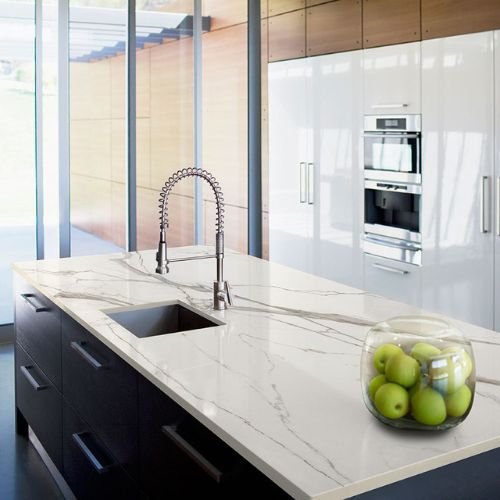
Want your granite to gleam again—without renting heavy tools or calling a fabricator? You can restore clarity and luster to kitchen islands, bathroom vanities, and even fireplace surrounds with a careful hand-polishing routine. This step-by-step guide covers the why and how of polishing, what products are safe for granite stone, and where polishing ends and sealing begins. We’ll also weave in practical tips for black granite countertops, lighter speckled stones, honed finishes, and leathered textures.
What “polishing granite by hand” really means
Factory “polish” is a mechanical finish achieved with progressive diamond abrasives on industrial machines. At home, “polishing” means:
- Removing the films that dull shine (oils, soap residue, hard water).
- Enhancing optical clarity with a granite-safe polishing cream.
- Preserving that clarity with correct cleaning and, when appropriate, sealing.
If your surface has deep scratches, chips, or an etched look that doesn’t improve after this routine, you’re in restoration territory (a pro job). But most dullness is fixable with hand methods.

Materials & tools (hand-polishing kit)
- 2–3 clean microfiber cloths (edgeless, low-lint)
- pH-neutral stone cleaner (or warm water + a drop of dish soap)
- Stone-safe degreaser (optional but recommended for cooking zones)
- Stone-safe descaler (for hard-water haze around sinks/faucets)
- Granite polishing cream (non-wax, non-acrylic, labeled for natural stone)
- Isopropyl alcohol (70%) (optional final wipe to cut residual oils)
- Painter’s tape (for quick film test)
- Nitrile gloves and good ventilation
Avoid: vinegar, lemon, bathroom cleaners, bleach, ammonia, glass cleaners, abrasive powders/pads, or generic “floor polishes.” These can degrade sealer, streak, or haze the surface.
Step 1 — Prep & test: film or porosity?
Before you polish, diagnose the cause of dullness. Two fast tests will save you time.
A) Tape test (identifies film build-up)
Press painter’s tape over a cloudy patch and peel away. If the area under the tape looks glossier, you’re dealing with surface film—oils/soap residue that need better cleaning and de-greasing.
B) Water drop test (checks absorption)
Place 1 tsp of water on a clean, dry spot.
- Darkens within 1–10 minutes: Stone is absorbing; plan to seal after polishing.
- No darkening after 30 minutes: Your granite is dense; sealing may be less frequent.
If you’re unsure how often you should seal, these guides help:
- Do you have to seal granite countertops? ➜ https://allslabs.net/do-you-have-to-seal-granite-countertops/
- Does granite need to be sealed? ➜ https://allslabs.net/does-granite-need-to-be-sealed/
- How often to seal granite countertops? ➜ https://allslabs.net/how-often-to-seal-granite-countertops/
- How often should you seal granite countertops? ➜ https://allslabs.net/how-often-should-you-seal-granite-countertops/
Step 2 — Deep clean (the shine booster most people skip)
- Dry wipe crumbs and dust with a microfiber cloth.
- Wash with a pH-neutral stone cleaner (or warm water + drop of dish soap). Work in overlapping passes.
- De-grease high-use zones (cooktop edges, breakfast bar) with stone-safe degreaser. Rinse with clean water.
- Descale around sinks/faucets with a stone-approved descaler (great for granite bathroom countertops). Rinse thoroughly.
- Alcohol spot-wipe (optional): For stubborn fingerprints on black granite countertops, wipe with a cloth lightly dampened with 70% isopropyl alcohol, then immediately follow with water and buff dry.
Pro tip: A second dry microfiber is your streak-free secret—especially on dark stones.
Step 3 — Hand polish with a granite-safe cream
A quality granite polishing cream enhances clarity without leaving a waxy film.
How to apply by hand
- Ensure the stone is clean and bone-dry.
- Apply a pea-sized dot of polishing cream to a folded microfiber. Less is more.
- Work in small circles, overlapping each pass (about 2–3 sq ft at a time).
- Immediately buff off residue with a second dry microfiber until the cloth glides and the surface “pops.”
- Repeat on the next section. For large islands, work in lanes for even results.
What not to use
- Waxes or acrylic “coating” polishes → can attract dust, yellow, and cause blotchiness.
- Abrasive powders/pads → may haze a polished finish.
Step 4 — Seal (only if your test says you should)
Polishing ≠ sealing. Polishing improves shine; sealing reduces absorption and stains. If your water test showed quick darkening, apply an impregnating sealer after you’ve restored clarity:
- Mask edges of nearby wood or stainless if needed.
- Apply sealer to wet out the surface evenly; let it dwell per label.
- Before it dries on the surface, buff off all excess—sealer belongs in the stone, not as a film on it.
- Allow full cure (often 24–72 hours) before heavy use.
For honed or leathered finishes, two thin coats may be appropriate. Always follow the product label.
For more on sealing cadence, revisit:
- https://allslabs.net/how-often-to-seal-granite-countertops/
- https://allslabs.net/how-often-should-you-seal-granite-countertops/
Troubleshooting common polishing problems
Cloudy patches that return after cleaning
Likely film (soap/oil) or hard-water residue. Repeat Step 2 with a degreaser/descaler, then re-polish lightly.
Dull halo near the sink
Usually mineral scale. Use a stone-safe descaler; avoid vinegar or lemon (they can degrade sealer and streak on darker stones).
“Greasy” shine or smearing after polish
Too much product or a waxy formulation. Re-wet the area with the same polish and immediately buff completely dry, or clean with a stone-safe coating remover.
Tiny edge chips
You can soften feel with careful hand-buffing, but invisible repairs require a pro. For repairing chips in granite or polishing granite surfaces after repairs, call a fabricator.
Stains (oil, wine, coffee)
Polish won’t remove stains. Use a stone poultice designed for the stain type, then seal the area to reduce future absorption.
By finish & color: dialing in the hand-polish
Black granite countertops
- Show streaks first. Always clean → dry buff → polish → final dry buff.
- Avoid waxy sprays that create blotchiness.
White & light granites
- Prone to oil absorption near cooktops. Keep a regular sealing schedule where water darkens quickly.
- Polishing cream adds clarity to the quartz-feldspar matrix.
Honed & leathered granite
- Expect a soft sheen, not a mirror gloss; that’s normal.
- Hand polishing improves richness but won’t convert honed to polished—only diamond refinishing can.
Care cadence that keeps the shine
- Daily: pH-neutral wipe, then dry buff.
- Weekly: Degrease cooking zones; descale splash areas as needed.
- Monthly: Light pass with a granite polishing cream in high-glare/high-touch spots.
- Semiannually: Water test several areas; seal only where absorption appears.
This routine fits busy homes, low-maintenance granite countertops, and busy families who still want show-home shine.
Granite care vs. other countertop materials (quick compare)
- Granite vs quartz countertops: Granite tolerates heat better; quartz is lower-maintenance but can discolor with high heat. Both can look “marble-like” (think subtle veined patterns), but natural vs. engineered granite differs in porosity and pattern repeat.
- Granite vs marble: Granite is harder and less prone to etching; marble needs gentler cleaners and is better maintained with honed finishes in hard-use kitchens.
- Granite vs soapstone: Soapstone won’t need sealing but scratches more easily; many owners oil it for depth.
Buying & budgeting notes (SEO nuggets)
- Granite countertop cost depends on color rarity, granite slabs thickness (2 cm vs 3 cm), and complexity of fabrication & installation (edges, cutouts, seams).
- For value, shop local granite countertop suppliers and ask to see slabs in person—evaluate characteristics of granite such as movement, pits, and factory polish quality.
- Remnants are a smart play for bathroom vanities or laundry rooms—Affordable granite countertop options without sacrificing quality.
FAQs about hand-polishing granite
Will hand-polishing make granite slippery?
No. Proper granite polishing creams enhance clarity without leaving a slick coating.
Can I use glass cleaner for shine?
Skip it. Many contain ammonia/alcohol blends that can streak and may degrade sealer on natural stone countertops.
Do I polish before or after sealing?
Polish first, seal later only if needed based on absorption tests. Never trap residue under sealer.
How often should I polish by hand?
As needed. Many homeowners like a monthly quick polish on focal areas; the rest of the time, clean + dry buff is enough.
Step-by-step quick reference (print this!)
- Test: Tape test for film; water test for absorption.
- Deep clean: pH-neutral cleaner → degreaser (if needed) → descaler (if needed) → dry buff.
- Hand polish: Thin coat of granite polishing cream; small circles; buff dry immediately.
- Seal (optional): Only if water darkens quickly; apply thin, buff off excess, let cure.
- Maintain: Daily neutral clean + dry buff; monthly light polish.
Related reading on sealing (helpful when you’re done polishing)
- Do you have to seal granite countertops? → https://allslabs.net/do-you-have-to-seal-granite-countertops/
- Does granite need to be sealed? → https://allslabs.net/does-granite-need-to-be-sealed/
- How often to seal granite countertops? → https://allslabs.net/how-often-to-seal-granite-countertops/
- How often should you seal granite countertops? → https://allslabs.net/how-often-should-you-seal-granite-countertops/
The bottom line
Hand-polishing granite is less about magic products and more about smart sequence: remove films, enhance clarity with a stone-safe polish, then seal strategically where tests show absorption. Follow the routine above and your white, grey, or black granite countertops will hold a crisp, reflective finish that elevates your kitchen or bath—without power tools or a shop visit.