

Granite is a natural igneous granite stone packed with shimmering quartz and feldspar. When light passes through these translucent minerals and bounces back, you get that deep, glass-like reflection everyone loves. Over time, however, even premium slabs—whether classic white granite countertop styles or moody black granite countertops—can look dull from soap films, hard-water deposits, and residue from the wrong cleaners.
This step-by-step, semantic SEO guide shows you exactly how to restore luster safely, keep it longer, and avoid common mistakes. We’ll cover daily care, polishing methods, when (and when not) to seal, and special notes for honed, leathered, and high-traffic kitchen and bath zones.
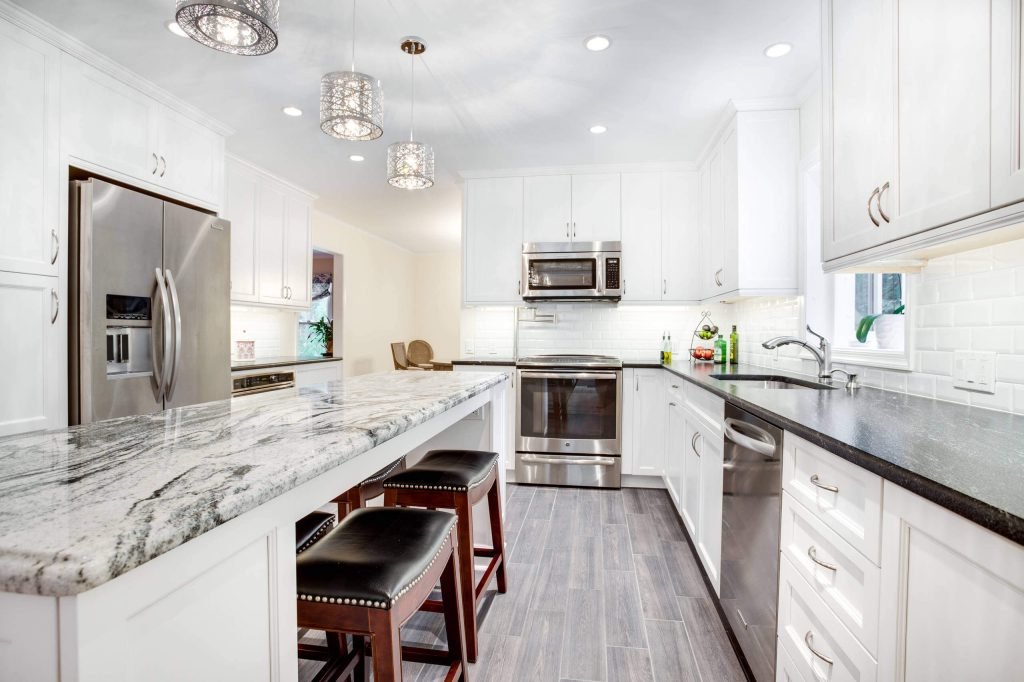
Why Granite Loses Its Shine
Granite’s gloss drops for a few predictable reasons:
- Residue films (dish soap, all-purpose sprays, aerosol oils) that sit on the surface.
- Hard-water minerals (calcium, lime) along sinks and faucets.
- Improper sealer residue left to dry on top instead of being buffed off.
- Tiny abrasions from gritty cloths or abrasive powders.
If your countertop looks hazy, restoring clarity usually means: remove residue → dissolve minerals → hand-polish → seal only if the stone needs it.

Quick Diagnostics: Film vs. Minerals vs. Absorption
The Water-Drop Test (Do You Need Sealer?)
Place a teaspoon of water on a clean area for 10–30 minutes:
- Darkening occurs: the stone is absorbing—consider sealing that zone after polishing.
- No change: either your slab is naturally dense or already well sealed; focus on cleaning + polish.
For deeper guidance on timing, see how often to seal granite countertops? and how often should you seal granite countertops?.
The Tape Test (Surface Film Check)
Stick blue painter’s tape on a cloudy patch, burnish, and peel. If the spot under the tape looks clearer, you’re seeing surface film—a strong sign that thorough cleaning and buffing will revive the shine.
Tools & Products (Stone-Safe Only)
- Multiple plush microfiber cloths (edgeless if possible)
- pH-neutral stone cleaner (for daily maintenance)
- Stone-safe degreaser (for cooking zones)
- Stone-safe descaler (for mineral buildup; avoid acids not labeled stone-safe)
- Granite polishing cream or stone polish (non-wax, non-acid)
- Optional: 70% isopropyl alcohol (streak relief on dark slabs)
- Nitrile gloves & good ventilation
Avoid: vinegar, bleach, ammonia, bathroom/tile cleaners, glass cleaners, abrasive powders, melamine erasers, or furniture polishes. These can dull or etch finishes, strip sealer, and streak—especially noticeable on black granite countertops.
Step-by-Step: Make Granite Shine Again
1) Deep Clean to Remove Faded Films
- Dry dust with microfiber to lift grit.
- Spray pH-neutral stone cleaner; wipe in overlapping passes.
- Degrease around the range/hood using a stone-approved degreaser; rinse.
- Descale sink rims/faucets using a stone-safe mineral remover; rinse thoroughly.
- Dry buff with a fresh microfiber until your cloth glides and the surface flashes.
Dark stone tip: After cleaning, a quick pass with 70% isopropyl alcohol followed by a dry buff removes last traces of oil haze without hurting the sealer.
2) Hand Polish to Restore Optical Depth
- Ensure the surface is clean and completely dry.
- Apply a pea-sized dot of granite polishing cream to a folded microfiber.
- Work a 2–3 sq ft area in tight, overlapping circles with light pressure.
- Buff off immediately with a second dry microfiber—don’t let product dry on the surface.
- Repeat across the top. Use less product, more buffing for a crisp, mirror finish.
For detailed techniques, bookmark how to polish granite countertops and how to polish granite by hand.
3) Seal Only If Needed (Per the Water-Drop Test)
Sealers don’t create shine; they reduce absorption to resist staining. If the water test indicates absorption:
- Apply a thin, even coat of an impregnating sealer.
- Allow the dwell time per label so it penetrates.
- Buff off all excess before it dries—sealer belongs in the pores, not as a film.
- Respect cure time (often 24–72 hours) before heavy use.
Not every slab—or every zone—needs annual sealing. Islands might be fine while sink rails absorb faster. Use the test seasonally and seal selectively.
Shine Strategies by Finish & Color
Polished Granite (High Gloss)
- Responds quickly to residue removal and light cream polish.
- Skip waxes and “wet look” sprays; they attract dust and smears.
Honed Granite (Matte/Satin)
- You’re aiming for a rich, even glow, not mirror gloss.
- Polish enhances clarity and color depth but won’t convert honed to gloss without mechanical refinishing.
Leathered/Brushed Granite (Textured)
- Texture hides fingerprints but can trap oils and soap.
- Focus on thorough degreasing and minimal product; buff well so nothing sits in micro-valleys.
Light vs. Dark Stones
- White granite countertop: stains show sooner—consider sealing food-prep zones if absorption is visible.
- Black granite countertops: show every streak—your winning routine is clean → dry buff → micro-polish → final dry buff.
Daily, Weekly & Seasonal Care (for Long-Lasting Shine)
- Daily: pH-neutral clean + dry buff for sparkle.
- Weekly: Degrease cooking zones; descale near sinks.
- Monthly: Quick hand polish on showcase areas (kitchen island, coffee bar).
- Seasonally: Water-drop test on multiple zones; seal where needed.
Troubleshooting: Haze, Spots, and Dull Patches
Cloudy Film or Streaks
Likely soap or sealer residue. Degrease → rinse → dry buff → light hand polish. If you see rainbow smears, you probably used too much product—re-emulsify with a tiny amount and buff completely off.
Water Spots / Mineral Rings
Use a stone-safe descaler, rinse thoroughly, dry buff, and then test for absorption. If the area darkens quickly, seal that section after polishing.
Stains (Oil, Coffee, Wine)
Apply a stone poultice matched to the stain type (oil-pulling vs. tannin-lifting). After removal, sealing that zone helps prevent re-staining.
Chips, Nicks, or Pitting
Polishing won’t fill voids. For structural issues, contact a fabricator who specializes in repairing chips in granite and edge refinishing.
Granite vs. Other Countertop Choices (Context for Shoppers)
If you’re comparing granite vs quartz countertops or exploring natural stone countertop comparison sets (granite vs marble, soapstone, or concrete):
- Granite is naturally heat resistant and tough, with unique movement and patterning.
- Quartz (engineered stone) offers color consistency and low maintenance but isn’t as heat tolerant.
- Marble wins for classic veining but is softer and more sensitive to acids.
- If you’re hunting value, check wholesale granite suppliers and local fabricator remnant yards for affordable granite countertop options—especially good for bathroom vanities and laundry rooms.
Design-wise, granite pairs beautifully with a wide range of cabinet colors and granite backsplash designs, from subtle subway tiles to full-height stone for a seamless, glossy look.
One-Page Routine: “Shine in Ten”
- Dry dust to remove grit.
- Spray pH-neutral cleaner; wipe thoroughly.
- Degrease/descale trouble zones; rinse.
- Dry buff until the cloth glides.
- Apply a pea-sized dot of polish to microfiber; work a 2–3 sq ft area.
- Buff off immediately with a clean, dry cloth to a mirror finish.
- Run the water test seasonally; seal as needed—not on a fixed calendar.