

Granite is famous for being tough, glossy, and long-lasting—but even granite stone can start to look tired. Years of cooking, spills, harsh cleaners, and hard water can leave your countertops looking:
- Dull instead of shiny
- Cloudy around sinks and stoves
- Scratched or lightly etched
- Chipped at edges and corners
That’s when people start asking: “Can I refinish granite countertops, or do I have to replace them?”
The good news: in most cases, you can refinish and restore granite countertops to a like-new shine without replacing the stone. This guide walks you through:
- What “refinishing granite” really means
- How to prep, clean, repair, polish, and seal granite
- When DIY is enough and when to hire a pro
- How refinishing fits into the bigger picture of cost, design, and alternative materials
- Where Aardwolf granite products fit into the long-term plan
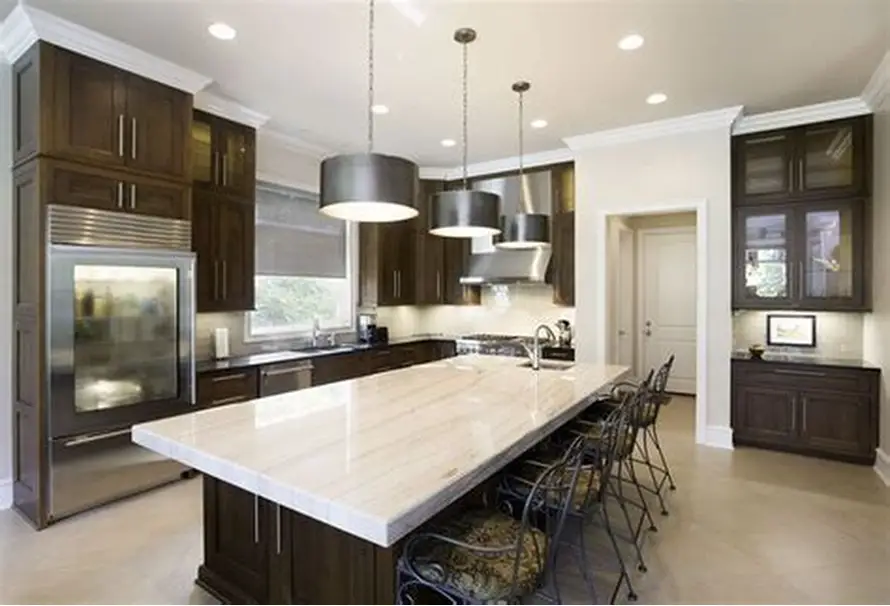
What Does It Mean to Refinish Granite Countertops?
“Refinishing” granite usually includes some or all of these steps:
- Deep cleaning to remove grease, soap film, hard water deposits, and residues
- Removing stains from granite with targeted methods
- Repairing chips in granite and minor cracks
- Polishing granite surfaces to restore gloss and clarity
- Sealing granite to protect against future stains and dullness
In mild cases, you may only need steps 1, 4, and 5. In heavier-use kitchens, you might work through the full list.

Understanding Granite Stone Before You Refinish It
Granite geology and composition
Granite is an intrusive igneous rock formed when magma cools slowly deep underground. That slow cooling creates large crystals of:
- Quartz – adds hardness and scratch resistance
- Feldspar – provides many of the white, cream, and pink tones
- Mica & accessory minerals – give darker flecks and subtle sparkle
These minerals create the key characteristics of granite:
- Very high hardness (great for everyday kitchen use)
- Excellent heat resistance
- Slight natural porosity (important for sealing)
- Ability to take a mirror-like polish
If you want to dive deeper into the science, pair this guide with:
Natural vs. engineered granite (quartz)
When planning any refinishing project, it helps to know what you’re working with:
- Natural granite stone
- Quarried slabs
- Slightly porous
- Can be re-polished, repaired, and re-sealed many times
- Engineered quartz (often used instead of granite)
- Made from crushed stone + resins
- Non-porous
- Cannot be refinished in the same way if severely damaged
This article focuses on refinishing natural granite countertops, though some cleaning advice also applies to quartz.
Step 1: Deep Cleaning for Truly Clean Granite Countertops
You cannot polish or seal over grime and residue. Start by getting your granite countertops absolutely clean.
How to deep-clean granite safely
- Clear everything off the counters
Remove appliances, décor, drying racks—everything. - Dry wipe
Use a soft, dry microfiber cloth to sweep away crumbs and grit. - Wash with a pH-neutral cleaner
- Mix warm water with a few drops of mild dish soap, or
- Use a cleaner specifically labeled safe for granite or natural stone.
- Rinse thoroughly
Wipe again with clean water to remove any soap film. - Dry completely
Buff dry with a clean microfiber cloth so you can actually see what’s going on with the stone.
If you have cloudy, filmy areas (especially around sinks, faucets, or in bathrooms), that’s often soap or mineral buildup. For those spots, use this focused guide:
Once the surfaces are truly clean and dry, you’ll clearly see stains, dull patches, or chips that need deeper refinishing.
Step 2: Targeted Stain Removal Before You Refinish
Refinishing isn’t just about shine; it’s also about removing stains from granite so the surface looks even and bright.
Common stains on granite
- Coffee, tea, wine, and food stains
- Oil and grease from cooking
- Ink and permanent marker
- Soap scum and hard water deposits around sinks
Each type of stain needs a different approach. Use these resources for specific issues:
- Superglue or adhesive spills:
Accidents with glue do happen. Learn how to treat them with
How to remove superglue from granite - Marker, ink, or Sharpie accidents:
Kids’ artwork or a stray marker line? See
How to get Sharpie off granite - Soap film and bathroom haze:
For cloudy, dull areas near sinks, revisit
How to remove soap scum from granite
Many deeper stains require a poultice—a paste that sits on the stone and draws out contaminants over several hours. Dealing with stains first ensures polishing won’t simply highlight those flaws.
Step 3: Repairing Chips in Granite (Edges & Corners)
Chips and small pits can make even a shiny surface look neglected. Repairing chips in granite is an important part of a full refinishing project.
DIY chip repair for minor damage
Small chips at the front edge or around sinks can often be repaired at home:
- Clean and dry the damaged area thoroughly.
- Apply a clear or color-matched epoxy designed for stone.
- Carefully fill the chip so it’s level with the surrounding surface.
- Allow the epoxy to cure fully (follow the product instructions).
- If the kit allows, very lightly shave or sand any excess and buff.
When to call a professional
Call a stone restoration pro if:
- Chips are large or deeply cracked
- Damage extends into seams or across corners
- There are structural issues or significant movement in the counter
Professionals can blend repairs and re-polish so they’re nearly invisible.
Step 4: Polishing Granite Surfaces to Restore the Shine
Once your countertops are clean, stain-free, and repaired, it’s time to polish granite surfaces and bring back that showroom gloss.
Light DIY polishing
For countertops that are mostly just dull or lightly hazy:
- Use a granite-specific polish or polishing cream (never furniture polish or floor wax).
- Apply according to the manufacturer’s instructions.
- Buff with a clean, soft microfiber cloth in overlapping circles.
This is often enough to revive shine on both a white granite countertop and black granite countertops that have lost some of their depth and reflectivity.
Professional honing and polishing
If you see:
- Heavy etching or widespread dullness
- Numerous fine scratches
- Uneven finish (some areas glossy, others flat)
…then professional honing and polishing may be worth the investment. Stone pros use diamond abrasives with water, gradually smoothing and refining the surface until it regains a factory-like shine.
For a more comprehensive, restoration-style approach, you can also read:
That guide pairs nicely with refinishing when your countertops need more than just a light touch-up.
Step 5: Sealing Granite After Refinishing
A freshly polished surface needs protection. Because granite is slightly porous, sealing granite is a critical part of refinishing.
Is granite non-porous?
Natural granite is not fully non-porous; it contains microscopic pores between mineral grains. Those pores can absorb liquids and stains if left unsealed. For a deeper look, check:
That’s why sealing matters so much.
How to seal granite countertops
- Test for absorption
Place a few drops of water on the stone. If it darkens within several minutes, your sealer is worn and it’s time to reseal. - Clean and dry
Ensure the countertop is spotless and completely dry. - Apply a penetrating sealer
Use a soft cloth or applicator, working in small sections. - Let it dwell
Allow the sealer to soak in for the recommended time. - Wipe off excess
Remove any residue and buff with a clean, dry cloth. - Allow to cure
Avoid water and heavy use until the sealer has fully cured (see product label).
A well-sealed surface makes future clean granite countertops maintenance much easier and extends the life of your refinishing work.
Granite vs Other Countertop Materials: Is Refinishing Worth It?
Understanding where granite sits in a natural stone countertop comparison helps you decide whether to refinish or replace.
Granite vs quartz countertops
- Granite
- Natural stone
- Slightly porous (needs sealing)
- Excellent heat resistance
- Can be re-polished and refinished
- Quartz
- Engineered surface
- Non-porous (no sealing required)
- Less tolerant of high heat
- Damage is harder to “refinish” in place
For homeowners who love real stone, refinishing granite is often more appealing than replacing it with quartz.
Granite vs marble: pros and cons
- Marble is softer and more porous—beautiful but prone to etching and staining.
- Granite is harder and more forgiving, making refinishing more straightforward and long-lasting for busy kitchens.
Granite vs soapstone durability
- Soapstone resists stains but scratches easily and often needs frequent surface oiling.
- Granite holds a polish longer, resists scratching, and is easier to keep glossy after refinishing.
Granite better than concrete countertops?
- Concrete is extremely porous and relies heavily on sealers, with greater risk of cracking.
- Granite is naturally strong and dense; once refinished and sealed, it often outperforms concrete in both durability and maintenance.
In many cases, refinishing granite countertops is more cost-effective and practical than switching to other materials.
Cost, Sourcing & Aardwolf Granite Solutions
Granite countertop cost & where to buy
If your refinishing project makes you think about adding an island, extending counters, or changing layouts, it helps to understand granite countertop cost and sourcing:
- Prices depend on color rarity, pattern, thickness, and local labor rates.
- You can find affordable granite countertop options at big-box stores.
- Custom colors and dramatic patterns are often available from wholesale granite suppliers and local fabricators.
Aardwolf granite: complementing your refinishing project
If you decide to add or replace sections while refinishing, Aardwolf can help create a cohesive look:
- The Aardwolf granite countertop collection offers stones selected for durability and attractive patterning.
- Aardwolf premium granite slabs are designed to integrate well with refinished surfaces in both color and performance.
- Aardwolf granite installation services provide professional templating, seam placement, and installation—including proper initial sealing.
- The Aardwolf granite pricing guide helps you explore different tiers and pick from the best Aardwolf granite colors that match your cabinets, flooring, and granite backsplash designs.
Combining refinishing with well-planned new granite elements can transform your kitchen or bath without a full tear-out.
Final Thoughts: Is Refinishing Granite Countertops Right for You?
How to refinish granite countertops comes down to a clear, repeatable process:
- Deep-clean to remove buildup and reveal the true condition.
- Use targeted methods for removing stains from granite (coffee, marker, superglue, soap scum, and more).
- Repair chips in granite edges and corners.
- Polish granite surfaces to restore color depth and shine.
- Seal granite to protect against future stains and dullness.