
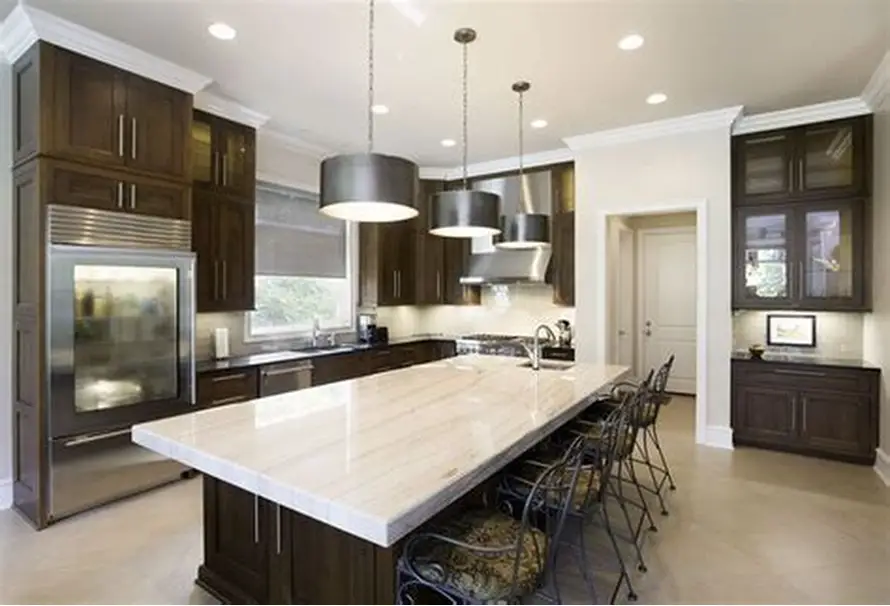
Seeing a chip in your granite countertop can be a gut punch. Granite is known for being tough, luxurious, and long-lasting—so when an edge pops off near the sink or a corner takes damage from a dropped pan, it’s natural to worry you’ve ruined an expensive investment.
The good news:
In most cases, repairing chips in granite is absolutely possible, and the repair can be nearly invisible.
Unlike soft sedimentary rocks like shale, which flake and crumble under stress, granite stone is dense, crystalline, and refinishable. With the right products and technique, you can fix chips, re-polish the surface, and keep your countertops looking like new.
This guide explains:
- Why granite chips and how that relates to granite geology and composition
- When DIY granite chip repair makes sense vs. calling a pro
- A step-by-step method for how to repair chipped granite at home
- How cleaning, polishing, and sealing fit into long-term care
- Where granite sits in a natural stone countertop comparison with quartz, marble, soapstone, and concrete
- How Aardwolf products can support new installs and upgrades
We’ll also point you to deeper resources on cleaning and refinishing:
- How to remove soap scum from granite
- How to restore granite countertops
- How to refinish granite countertops
- Can Granite Countertops Be Refinished? (a key topic you’ll likely explore next)
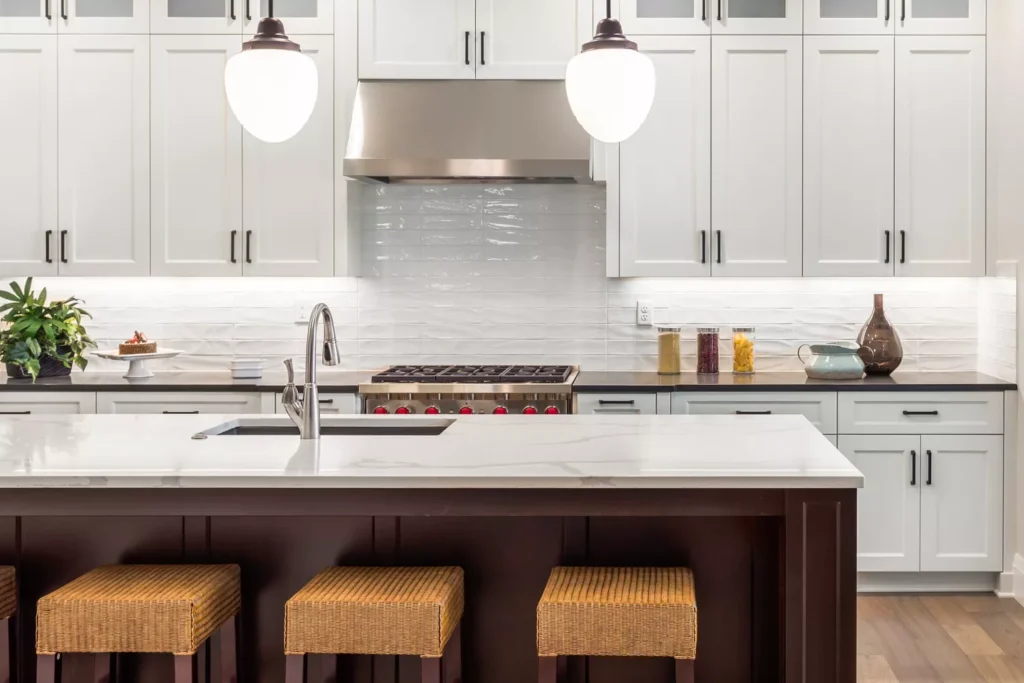
Understanding Granite Stone (and Why It Chips Differently Than Shale)
Granite geology and composition
Granite is an intrusive igneous rock formed when molten magma cools slowly deep beneath the Earth’s crust. That slow cooling creates large, interlocking crystals of:
- Quartz – gives hardness and scratch resistance
- Feldspar – provides much of the white, cream, grey, or pink background
- Mica and accessory minerals – add dark flecks, veins, and shimmer
These minerals create the core characteristics of granite:
- Extremely strong and rigid
- Excellent heat resistance
- Slightly porous (which is why sealing granite matters)
- Able to take and hold a high polish
Granite vs shale in the kitchen
By contrast, shale is a fine-grained sedimentary rock made of compressed mud and clay:
- It splits into thin, fragile layers
- It quickly breaks down under load and weathering
- It has nowhere near the strength required for counters
Shale makes interesting cliffs and road cuts, but it’s useless as a work surface. Granite’s geological strength is exactly why:
- It’s used for white granite countertop and black granite countertops in busy kitchens
- It can be repaired, polished, and refinished when damaged

Why Do Granite Countertops Chip?
Even though granite is tough, it isn’t indestructible. Chips typically occur:
- Along front edges where pots, pans, or heavy objects strike
- Around sink cutouts, where the stone is narrow and frequently contacted
- At dishwasher or range edges from installation knocks or door impacts
- On outside corners that take direct impact
These chips don’t mean the stone is bad—they usually reflect impact or stress at thinner, more vulnerable sections.
Because granite is solid all the way through, repairing chips in granite is usually a matter of filling, blending, and finishing the damaged area rather than replacing the slab.
Should You Repair or Replace a Chipped Granite Countertop?
Before you learn how to repair chipped granite, ask:
- Size of the chip: Tiny pits and small edge flakes are perfect for DIY. Large missing chunks may need a pro.
- Location: A chip on an exposed front edge is easy to reach; a large break near an undermount sink or seam is more serious.
- Structural condition: If you see large cracks running through the slab, replacement or professional reinforcement may be needed.
From a granite countertop cost perspective, repair is usually far more economical than replacement. Full replacement involves:
- New stone (possibly more expensive, depending on what you choose)
- Fabrication and installation labor
- Plumbing disconnect/reconnect and possible cabinet adjustments
That’s why many homeowners prioritize:
- DIY or professional chip repair
- Deep cleaning and refinishing
- Exploring affordable granite countertop options or additions only if layout changes are desired
Step-by-Step: How to Repair Chipped Granite at Home
1. Inspect and evaluate the chipped granite
Look closely at:
- Depth and width of the chip
- Whether the chipped piece is still available (sometimes it can be glued back)
- Any hairline cracks radiating from the damage
If the damage is small and mostly cosmetic, DIY is usually safe. For structural cracks, large missing pieces, or loose sink rails, call a professional stone restoration specialist.
2. Clean granite countertops around the chip
You can’t fix what’s dirty. Begin by thoroughly cleaning the area.
- Wipe down with warm water and mild dish soap or a stone-safe cleaner.
- Remove any grease, food, or residue near the chip.
- Rinse with clean water and dry with a soft microfiber cloth.
If the area has cloudy film or buildup—especially near sinks—follow a more targeted approach such as:
Starting with truly clean granite countertops ensures that epoxies or fillers bond properly.
3. Choose the right granite chip repair kit
For most DIY projects, you’ll want:
- A clear or tinted epoxy or acrylic specifically formulated for stone
- Mixing sticks and a small applicator (toothpick, plastic spatula, or tiny putty knife)
- Disposable gloves
- Painter’s tape to mask off the surrounding granite stone
Clear epoxy often works well for speckled stones. For more uniform colors (like many black granite countertops or some white granite countertop designs), a tinted kit can help the repair blend more seamlessly.
4. Mask the area and prepare the chip
- Use painter’s tape around the chip to protect adjacent surfaces.
- If the chip has loose fragments, gently remove them.
- Wipe the chipped area with isopropyl alcohol to remove any final oils or residues.
This prep step is crucial—good bonding depends on a clean, dry surface.
5. Fill the chip: the core of repairing chips in granite
Follow the instructions on your repair kit, but the process usually looks like this:
- Mix the epoxy or resin
- Combine resin and hardener in the recommended ratio.
- If color tints are provided, add tiny amounts gradually to match your stone.
- Apply to the chip
- Use a toothpick or small spatula to pack the mixture into the chip.
- Slightly overfill so the repair is a bit proud of the surrounding surface.
- Smooth the surface
- Shape the epoxy to mimic the original edge or corner profile as closely as possible.
- Remove any excess on the tape before it cures.
- Let it cure fully
- Follow the cure time exactly—this may range from a few hours to overnight.
Once cured, your chipped edge will be structurally stable again.
6. Level and polish granite surfaces after repair
After the filler has fully hardened:
- Carefully use a razor blade (if your kit allows) to shave off any raised excess.
- Gently smooth and blend the repair with ultra-fine abrasives or polishing pads, following kit instructions.
- Wipe the area clean and examine under good light.
This blending step is especially important for visually prominent spots near the front edge or on a dark black granite countertop.
For extensive blending across the whole surface, professional polishing granite surfaces may be worth the investment—especially if your counters are older or dull overall.
7. Seal the granite after chip repair
Once the area is repaired and polished, it’s smart to refresh the sealer across the entire top.
Sealing granite:
- Ensure the countertop is completely clean and dry.
- Apply a penetrating sealer evenly with a soft cloth or applicator.
- Let it dwell for the recommended time so it can soak in.
- Wipe off excess and buff with a clean cloth.
This helps protect your repair and makes future removing stains from granite easier.
After the Fix: Restoring and Refinishing Granite Countertops
A chip repair is often just one part of refreshing older stone. To restore overall gloss and clarity, explore:
This is where the question “Can Granite Countertops Be Refinished?” comes in. The short answer is yes—granite can be deep-cleaned, honed, and re-polished, turning tired surfaces back into a showpiece.
Refinishing is especially worthwhile if you’re also updating:
- Granite backsplash designs
- Cabinet finishes
- Hardware and lighting
- Layout elements like islands or breakfast bars
Design & Value: Keeping Repaired Granite Looking High-End
Once your repair is done, styling the space thoughtfully will help the eye focus on the overall design—not the area that was chipped.
Pairing granite with cabinet colors
Smart pairing granite with cabinet colors can enhance natural stone:
- Warm-toned granite with creamy whites or natural wood cabinetry
- Cool greys with navy, charcoal, or crisp white cabinets
- Bold contrast with black granite countertops against white shaker cabinets
White granite countertop and backsplash ideas
For a white granite countertop:
- Consider full-height granite backsplash designs for a seamless luxury look.
- Or mix granite with subway tile or textured ceramics for contrast and budget control.
Because granite is unique, even a repaired top feels one-of-a-kind compared to many man-made alternatives.
How Granite Compares When Things Go Wrong: Quartz, Marble, Soapstone & Concrete
A chipped countertop can make you question your material choice. Here’s how granite stacks up in a natural stone countertop comparison.
Granite vs quartz countertops
- Granite
- Natural stone; can be repaired, repolished, and resealed.
- Excellent heat resistance.
- Quartz
- Engineered; non-porous and low-maintenance.
- Resins are more sensitive to direct high heat and some chemicals.
When damaged, quartz repairs can be trickier to blend invisibly. Granite’s fixability is a real advantage.
Granite vs marble: pros and cons
- Marble is softer, more prone to chips, scratches, and etching from acids.
- Granite is harder and more forgiving in busy kitchens.
If you’re comparing surfaces after a chip, granite still tends to be the tougher, more practical choice.
Granite vs soapstone durability
- Soapstone is non-porous and stain-resistant, but softer and easier to scratch and dent.
- Granite provides better long-term resistance to wear in high-traffic spaces.
Granite better than concrete countertops
- Concrete countertops can crack, chip, and require heavy sealing and reinforcement.
- Granite is naturally dense, strong, and easier to maintain and repair.
In many real kitchens, granite better than concrete countertops on both performance and long-term cost.
Aardwolf & the Bigger Granite Picture: When Repair Leads to Upgrade
Sometimes chip repair is a bridge to larger updates: adding an island, extending a bar, or redoing part of your layout. That’s where Aardwolf comes in.
- The Aardwolf granite countertop collection offers carefully curated stones that pair well with existing installations.
- Aardwolf premium granite slabs are selected for structural quality and attractive patterning.
- With Aardwolf granite installation services, you get professional templating, cutting, seam planning, and correct initial sealing.
- The Aardwolf granite pricing guide helps you compare materials and edges, so you can choose the best Aardwolf granite colors that align with budget and style.
Blending a properly repaired existing countertop with new Aardwolf pieces can give your kitchen or bath a custom, high-end look without starting from scratch.
Final Thoughts: Don’t Panic—Chipped Granite Is Fixable
A chip in your granite might be alarming, but it’s usually a cosmetic issue, not a catastrophe.
To recap how to repair chipped granite:
- Inspect the chip and decide if DIY repair is appropriate.
- Thoroughly clean and de-film the area so products adhere.
- Mask the surrounding stone and prepare a stone-safe epoxy or filler.
- Carefully fill, shape, and cure the repair.
- Blend and polish granite surfaces so the repair is smooth and discreet.
- Reseal the stone to protect against future staining and wear.