

Granite countertops are famous for being tough, beautiful, and long-lasting but they still need the right care to stay glossy and stain-free for decades.
And what about shale? You might see shale mentioned in geology questions alongside granite, but it’s a soft, layered sedimentary rock that would crumble in a busy kitchen. In real homes, we’re talking granite stone, quartz, marble, and other durable materials—not shale countertops.
This guide walks you through how to take care of granite countertops day-to-day and long-term, using simple habits, smart cleaning, and basic maintenance. We’ll also touch on cost, design choices, and how to handle chips and cracks if they ever happen.
We’ll link to deeper how-to resources like:
- how to fix cracked granite
- how to fix a crack in a granite countertop
- how to repair chipped granite with superglue
- how to protect granite countertops

Understanding granite stone: geology, composition & why it lasts
Granite geology and composition
Granite is a natural igneous rock formed when molten magma cools slowly deep in the Earth’s crust. That slow cooling lets mineral crystals grow large and interlock tightly. Typical granite geology and composition includes:
- Quartz – very hard and scratch-resistant
- Feldspar – controls much of the base color (white, cream, grey, pink)
- Mica & accessory minerals – add sparkle, flecks, and veining
These minerals create the core characteristics of granite:
- High hardness and durability
- Excellent heat resistance
- Slight porosity (it can absorb liquids without sealing)
- Unique, non-repeating patterns
That’s why a white granite countertop in a bright kitchen or dramatic black granite countertops in a modern design can handle real cooking, not just staged photos.
Natural vs. engineered granite alternatives
Strictly speaking, granite itself is always natural. But in showrooms, you’ll also see:
- Natural granite stone – slabs cut from the earth, polished, and sealed
- Engineered surfaces (like quartz) – crushed stone + resins + pigments
Care instructions overlap, but natural granite needs special attention to sealing granite and stain prevention, while engineered surfaces are more sensitive to heat.
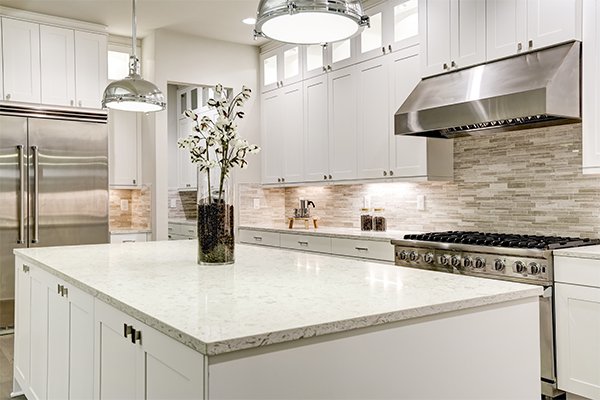
Daily care: how to keep clean granite countertops the right way
Use gentle, granite-safe cleaners
Daily cleaning is the foundation of how to take care of granite countertops. The goal is clean granite countertops without damaging the sealer or stone.
Use:
- A few drops of mild dish soap in warm water
- pH-neutral, stone-safe cleaners
- Soft microfiber cloths or non-scratch sponges
Avoid:
- Vinegar, lemon, or citrus-based cleaners
- Bleach, ammonia, or abrasive powders
- Steel wool, scouring pads, or anything gritty
Harsh chemicals can dull the shine, strip sealer, and make the stone more vulnerable to stains.
Wipe spills quickly
Even sealed granite benefits from quick cleanup:
- Blot (don’t rub) spills like wine, coffee, oils, or tomato sauce
- Rinse with clean water
- Dry with a soft cloth
This simple habit dramatically reduces the chance of ever needing serious removing stains from granite treatments.
Protect from heat and scratches
Granite handles heat better than many countertop materials, but good habits extend its life:
- Use trivets or hot pads under very hot pots and pans
- Use cutting boards instead of chopping directly on the stone
- Don’t drag cast iron or heavy appliances across the surface
Your granite will likely survive the abuse—but your sealer and polish might not.
Sealing granite: the most important maintenance step
Why sealing granite matters
Because granite is slightly porous, unsealed stone can absorb:
- Oils (which darken the surface)
- Wine, coffee, and colored liquids
- Water that can leave marks or rings
A penetrating sealer:
- Reduces absorption
- Gives you more time to wipe spills
- Keeps lighter stones and any white granite countertop from discoloring
How to test if your granite needs sealing
Do a quick “water test”:
- Place a few drops or a small puddle of water on the granite.
- Let it sit for 10–15 minutes.
- Wipe it off and check the stone.
If the area darkened, your granite is absorbing water and likely needs resealing.
How to seal granite countertops
Basic steps for sealing granite:
- Clean the countertop thoroughly and let it dry completely.
- Apply sealer evenly with a soft cloth or pad, following the label.
- Let it dwell for the recommended time so it penetrates the pores.
- Wipe off excess and buff with a clean microfiber cloth.
Most kitchens benefit from sealing every 1–3 years, depending on stone density and usage.
How to take care of chips, cracks & other damage in granite
Even with good habits, accidents happen. Taking care of granite means knowing how to react when something chips, cracks, or breaks.
Repairing chips in granite
Small chips along edges and corners are common, especially near sinks and dishwashers. Often they can be addressed by:
- Filling with color-matched resin or epoxy
- Leveling and polishing granite surfaces to blend the repair
If you’re comfortable with DIY, guides like how to repair chipped granite with superglue walk through step-by-step repairs. For large or very visible chips, a stone pro is worth the call.
Fixing cracked granite
Cracks can range from hairline to structural. The way you take care of them depends on severity:
- Hairline cracks (no movement, very thin) may be largely cosmetic
- Structural cracks (movement, height difference, gap) can indicate support issues
For more detail, see:
Prompt attention to cracks prevents them from worsening and protects the integrity of your countertop.
Long-term maintenance: polishing granite surfaces & protecting the finish
Polishing granite surfaces
Over time, you might notice:
- Dullness in high-traffic zones
- Fine scratches from gritty dishware or sliding objects
- Loss of shine around sinks or prep areas
Professional polishing granite surfaces can:
- Remove fine scratches
- Restore reflective shine
- Refresh older countertops without replacing them
Combined with regular sealing and proper cleaning, polishing is part of long-term granite stone care.
Protecting granite countertops from future damage
Once you’ve cleaned, sealed, and (if needed) repaired your granite, you’ll want to keep it that way. A deeper overview of prevention habits is covered in how to protect granite countertops.
Cost & design: how care ties into granite countertop cost
Granite countertop cost and value
Understanding granite countertop cost helps you appreciate why good care matters:
- Granite is often more affordable than many luxury surfaces, yet still considered premium.
- Proper maintenance extends the life of your investment, delaying the need for replacement.
You can choose from:
- Budget-friendly, affordable granite countertop options
- Mid-tier stones with interesting patterns
- High-end exotics for statement islands
Smart care ensures that whatever price point you choose, you get maximum value over time.
Where to buy granite countertops
To get quality stone that’s worth caring for, consider:
- Local fabricators with showrooms
- Kitchen & bath retailers
- Wholesale granite suppliers (often accessed through your installer)
Look for consistent Polish, minimal defects, and clear guidance on sealing and care.
Design choices and ease of care
Some design choices make granite easier to live with:
- Granite backsplash designs (4″ splashes or full-height slabs) protect walls and seams.
- Rounded edges are less likely to chip than sharp, flat edges.
- Thoughtful pairing granite with cabinet colors creates a timeless look you won’t want to swap out in a few years.
Whether you prefer a white granite countertop for an airy feel or black granite countertops for dramatic contrast, design choices and care routines work together to extend the life of your kitchen.
Natural stone countertop comparison: granite vs other materials
To understand how much care granite really needs, it helps to compare it with other surfaces.
Granite vs quartz countertops
- Granite
- Natural stone
- Needs sealing but offers great heat resistance
- Can often be repaired, repolished, and refreshed
- Quartz (engineered)
- Non-porous, no sealing needed
- More sensitive to very high heat
- Scratches and chips can be trickier to make “disappear”
Granite vs marble: pros and cons
- Marble: softer, more prone to scratching and etching from acids; requires more careful daily care.
- Granite: harder, more forgiving, and often easier to maintain in real, high-traffic kitchens.
Granite vs soapstone durability
- Soapstone: non-porous and stain-proof, but soft and easy to scratch or dent.
- Granite: better scratch resistance and holds its glossy finish longer.
Granite better than concrete countertops
- Concrete countertops: can crack, stain, and require frequent sealing and upkeep.
- Granite: naturally dense, strong, and simpler to maintain and repair—one reason many homeowners conclude granite better than concrete countertops for long-term use.
Aardwolf granite: choosing stone that’s worth taking care of
If you’re investing in granite, it makes sense to start with quality materials and installation.
Aardwolf granite countertop collection
The Aardwolf granite countertop collection focuses on:
- Carefully selected Aardwolf premium granite slabs for structural integrity and beauty
- A curated palette of the best Aardwolf granite colors, from versatile neutrals to bold statement stones
Aardwolf granite installation services & pricing guide
With Aardwolf granite installation services, you get:
- Professional templating and support to prevent future cracks
- Quality seams, edges, and cutouts that minimize stress points
- Advice on sealing, cleaning, and day-to-day care
The Aardwolf granite pricing guide helps you:
- Compare stones at different price levels
- Balance aesthetics, durability, and budget
- Choose granite stone that fits your lifestyle as well as your design vision
Simple checklist: how to take care of granite countertops every day
To keep your granite looking its best for years:
- ✅ Wipe daily with a soft cloth and stone-safe cleaner
- ✅ Blot spills quickly—especially oils, wine, coffee, and tomato sauce
- ✅ Use cutting boards, trivets, and coasters
- ✅ Test and seal granite periodically
- ✅ Avoid harsh chemicals and abrasive pads
- ✅ Address chips and cracks early using guides like:
- ✅ Follow long-term protection tips like those in how to protect granite countertops