
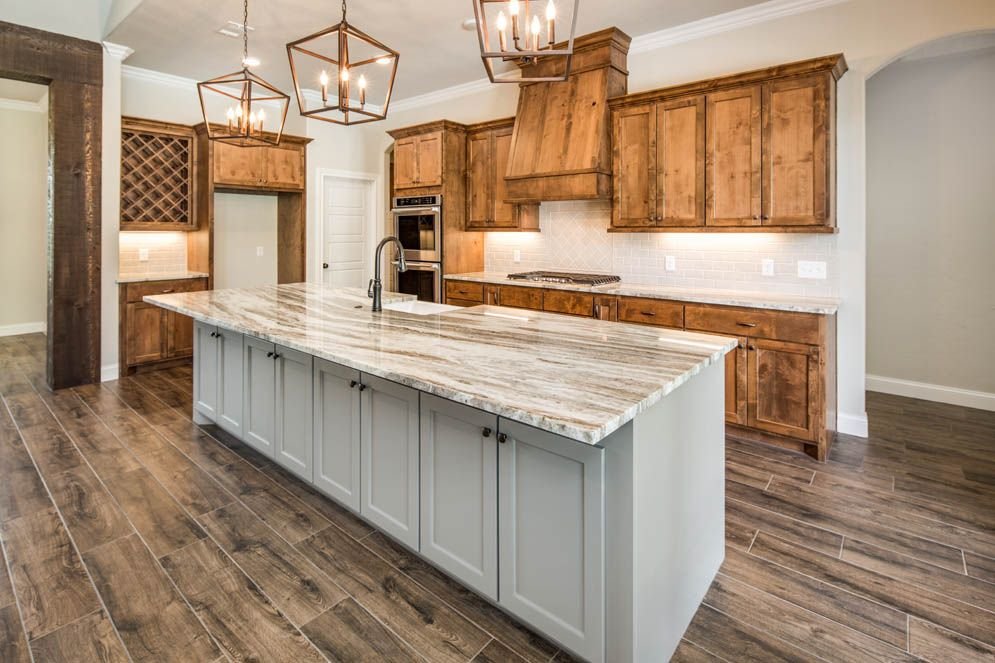
If your granite countertops used to shine like a showroom and now look a little dull, scratched, or stained, you’re probably wondering:
Can granite countertops be refinished, or do I have to replace them?
The good news: yes, granite countertops can be refinished—and in most kitchens, that’s far more practical and cost-effective than full replacement.
Unlike soft, flaky shale, which crumbles and layers apart and would never survive as a work surface, granite stone is a dense, hard igneous rock. Those very characteristics of granite are exactly what make it refinishable: you can deep clean it, repair minor damage, re-polish the surface, and reseal it for many more years of use.
This guide walks through:
- Why granite (not shale) is perfect for refinishing
- Step-by-step how to refinish granite countertops
- How to deal with stains, soap scum, and Sharpie
- When to call a pro vs DIY
- How refinishing ties into granite countertop cost and design
- Where Aardwolf granite products fit into the bigger picture

Why Granite Can Be Refinished (But Shale Can’t)
Granite geology and composition
Granite is an intrusive igneous rock, formed when magma cools slowly deep beneath the Earth’s surface. That slow cooling creates large crystals of:
- Quartz – extremely hard and scratch-resistant
- Feldspar – controls much of the background color
- Mica & accessory minerals – dark flecks, subtle veining, and sparkle
This granite geology and composition gives it:
- High density and compressive strength
- Excellent heat resistance
- Slight natural porosity
- A surface that can be ground, honed, and polished repeatedly
By contrast, shale is a soft, layered sedimentary rock that breaks into thin sheets. It weathers fast, has poor strength, and would never hold up as a kitchen worktop. That’s why you see granite in countertops and shale mostly in cliffs, road cuts, and textbooks.
Because of its geological strength, granite stone can be refinished, rather than thrown out, when it starts looking tired.
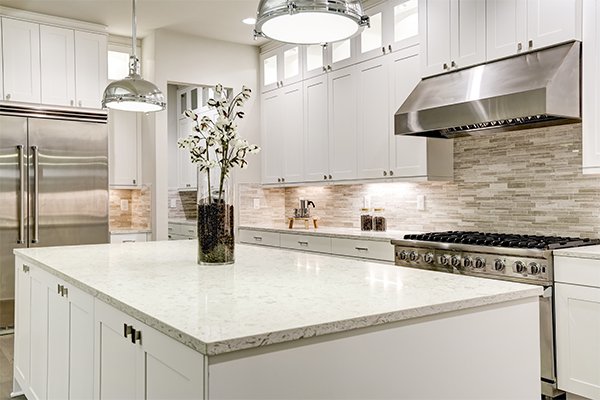
Can Granite Countertops Really Be Refinished?
Short answer: absolutely, yes.
Refinishing granite typically includes some or all of these steps:
- Deep cleaning to restore clean granite countertops
- Removing stains from granite (food, oils, ink, etc.)
- Repairing chips in granite at edges and corners
- Polishing granite surfaces to restore shine
- Sealing granite to protect against future stains and dullness
Sometimes a light refinish (clean, polish, seal) is enough. Older or heavily used surfaces may need a more involved process. For a deeper, restoration-level approach, you can also refer to:
Those resources complement this guide perfectly if you’re planning a full refresh.
Step-By-Step: How to Refinish Granite Countertops
1. Clear, inspect, and prep
Start by:
- Removing everything from the counters
- Checking for stains, dull patches, chips, and etched areas
- Noting heavy-use zones (around sinks, cooktops, and prep areas)
This quick inspection helps you decide whether you’re doing a light refresh or a full refinishing project.
2. Deep clean for truly clean granite countertops
You can’t polish or seal over soap film, grease, or mineral buildup.
How to deep clean granite safely:
- Dry dust with a soft microfiber cloth to remove crumbs and grit.
- Wash with warm water and a few drops of mild dish soap, or a stone-safe cleaner.
- Avoid vinegar, lemon juice, bleach, or abrasive powders—they can damage sealer and dull the finish.
- Rinse with clean water to remove any soapy residue.
- Dry and buff with a clean microfiber towel.
If you see stubborn cloudy film or rings (especially around sinks and faucets), it’s often soap scum or mineral deposits. Use this targeted guide:
Once the surface is fully clean and dry, you’ll clearly see what refinishing steps are needed next.
3. Removing stains from granite (Sharpie, oils, and more)
Before polishing or sealing, tackle stains so you’re not “locking them in.”
Common granite stains include:
- Coffee, tea, wine, and juice
- Oil and grease (dark, shadowy patches)
- Ink or permanent marker
- Soap scum and water marks
For marker and ink, this resource is invaluable:
Deep stains may need a poultice—a paste that pulls contaminants out of the pores of the stone. Once stains are significantly reduced or removed, your polishing and sealing will look much more even and professional.
4. Repairing chips in granite
Edges and corners sometimes chip from dropped pots, pans, or tools.
Small chip repair (DIY):
- Clean and dry the chipped area thoroughly.
- Use a clear or color-matched stone epoxy.
- Fill the chip slightly above surface level.
- Allow it to cure completely.
- Level and buff if the repair kit instructions permit.
If you see:
- Large chips
- Cracks running across seams
- Loose or unsupported corners
…it’s best to call a professional. They can stabilize the stone, blend repairs, and prepare the surface for machine polishing.
5. Polishing granite surfaces
Now it’s time to bring back that deep, glassy shine.
For mild dullness:
- Use a granite-specific polishing compound or cream.
- Apply a thin, even layer to a small section.
- Buff with a clean microfiber cloth in overlapping circles until the surface shines.
For heavier wear (widespread etching, scratches, or uneven gloss), a pro may:
- Hone the surface using diamond abrasives to remove a thin layer of stone
- Gradually refine the finish through finer grits
- Deliver a consistent, high-polish result
Again, pairing this guide with:
will give you a comprehensive picture of what a refined polish can achieve.
6. Sealing granite for long-term protection
After cleaning, stain removal, repairs, and polishing, sealing granite is critical.
How to seal granite properly:
- Test absorption with a few drops of water. If the stone darkens within minutes, it needs sealer.
- Apply a penetrating sealer using a soft cloth or applicator.
- Let it dwell for the time indicated on the label so it can soak into the stone.
- Wipe and buff away any excess before it dries on the surface.
- Allow to cure (usually several hours) before heavy use or getting the countertop wet.
Regular sealing keeps clean granite countertops easier to maintain and greatly reduces the risk of deep staining.
Refinish vs Replace: Granite Countertop Cost and Value
Refinishing is nearly always cheaper than replacement—especially when your existing stone is structurally sound.
Refinishing:
- Mainly labor and product costs
- Extends the life of stone already paid for
- Lets you keep a layout you already like
Replacing:
- New granite countertop cost (material + fabrication)
- Tear-out and disposal of old counters
- Installation, plumbing reconnection, and sometimes cabinet rework
If you’re happy with your stone’s general color and pattern, refinishing is usually the best value. If you’re craving a completely new look, then you’ll move into:
- Shopping for where to buy granite countertops locally
- Comparing affordable granite countertop options vs exotic stones
- Visiting wholesale granite suppliers to see full slabs in person
Design Payoff: What Refreshed Granite Can Do for Your Space
Once refinished, granite is not just functional—it’s a huge design feature.
White and black granite countertops
- A white granite countertop can make a kitchen feel larger, brighter, and more airy, especially when combined with light cabinets and plenty of natural light.
- Black granite countertops bring drama and depth, creating striking contrast with white or pale cabinetry and metallic hardware.
Granite backsplash designs and cabinet pairing
With a refreshed surface, you can lean into design details:
- Use full-height granite backsplash designs for a seamless, high-end look.
- Or pair simple tile with your granite for a more budget-friendly approach.
- Spend time pairing granite with cabinet colors so undertones work together—warm granite with warm woods, cool granite with greys and blues, or bold contrast for a modern style.
Refinishing is a great moment to rethink handles, lighting, and wall colors so your granite becomes the star again.
Natural Stone Countertop Comparison: Why Keep Granite?
Sometimes homeowners consider switching materials during a renovation. A quick natural stone countertop comparison can help.
Granite vs quartz countertops
- Granite
- 100% natural stone
- Needs sealing but can be refinished over time
- Excellent heat resistance
- Quartz
- Engineered (stone + resin)
- No sealing required
- Less tolerant of direct high heat
Granite vs marble: pros and cons
- Marble – Softer, very prone to etching from acids; gorgeous but high-maintenance.
- Granite – Tougher, more forgiving, and generally better suited to busy kitchens.
Granite vs soapstone durability
- Soapstone – Very stain-resistant but soft; scratches and dents more easily and often needs oiling.
- Granite – More scratch-resistant and better at holding a polished finish.
Granite better than concrete countertops?
- Concrete – Highly porous, can crack, and relies heavily on sealers and reinforcement.
- Granite – Naturally dense, strong, and much easier to keep looking good for decades.
In most cases, refinishing lets you keep a surface that still beats many alternatives—granite better than concrete countertops and often more practical than marble or soapstone for everyday use.
Aardwolf and the Bigger Granite Picture
Refinishing your current counters doesn’t mean you can’t expand or upgrade.
The Aardwolf granite countertop collection makes it easier to integrate new stone with old:
- Aardwolf premium granite slabs are selected for structural integrity and beautiful, consistent patterning.
- The range includes many of the best Aardwolf granite colors, from subtle neutrals to bold, veined showpieces.
With Aardwolf granite installation services, you can:
- Add a new island that complements your refinished tops
- Replace damaged sections with new matching or coordinating stone
- Ensure expert templating, cutting, support, and seam placement
And the Aardwolf granite pricing guide helps you understand how different stones and layouts affect cost so you can balance budget and design intelligently.
Final Thoughts: Yes, Granite Countertops Can Be Refinished
Unlike fragile rocks like shale, granite stone is made to last—and made to be restored.
To recap, can granite countertops be refinished?
✅ Yes. With the right process, you can:
- Deep clean and remove soap film and buildup
- Use targeted methods like
- Repair chips in granite along vulnerable edges
- Polish granite surfaces back to a brilliant shine
- Seal granite to protect your refinished surface for years to come