

Cracks in a granite countertop can be scary. Granite has a reputation for being nearly indestructible, so when you see a line running across your island or around the sink, it’s natural to panic and think the whole top needs replacing.
The truth is more nuanced:
Some cracked granite can be repaired successfully, while other cracks signal deeper structural problems.
And what about shale? You might see it mentioned in geology questions, but shale is a soft, flaky sedimentary rock—great in rock layers, terrible as a countertop. Granite, by contrast, is a dense igneous granite stone that can often be stabilized, filled, polished, and even refinished.
In this guide, you’ll learn:
- What causes cracks in granite (and why shale would fail instantly)
- How to tell hairline cracks from serious structural damage
- Step-by-step how to fix cracked granite or when to call a pro
- How cleaning, polishing, and sealing granite support repairs
- Where cracked granite fits in a granite vs quartz countertops comparison
- How Aardwolf granite products and services fit into repair or replacement decisions
You can dive deeper into related topics here:
- How to restore granite countertops
- How to refinish granite countertops
- Can Granite Countertops Be Refinished?
- How to repair chipped granite and How to Fix a Chip in Granite?
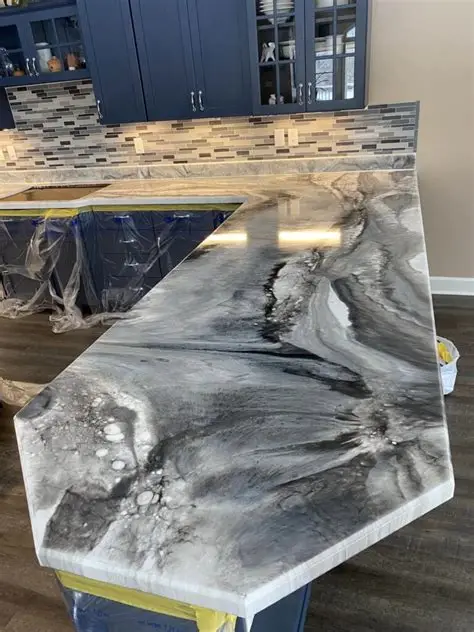
Granite Stone vs Shale: Geology, Composition and Cracks
Granite geology and composition
Granite is an intrusive igneous rock, formed when molten magma cools very slowly deep beneath the Earth’s surface. That slow cooling creates large, interlocking crystals of:
- Quartz – extremely hard, adds scratch resistance
- Feldspar – controls much of the base color (white, cream, grey, pink)
- Mica and accessory minerals – add flecks, veins, and sparkle
These give the key characteristics of granite:
- High compressive strength
- Excellent heat resistance
- Slight natural porosity (hence the need for sealing granite)
- A solid, crystalline structure that can be polished and even refinished
Why shale would crumble where granite survives
Shale is a fine-grained sedimentary rock made of compacted mud and clay. It:
- Breaks into thin, flaky layers
- Weathers and crumbles much more easily
- Lacks the strength needed for countertops
So while granite may crack from structural stress, impact, or poor support, shale would never survive as a countertop in the first place. Granite’s robust geology is why cracked granite can often be stabilized or repaired rather than replaced outright.
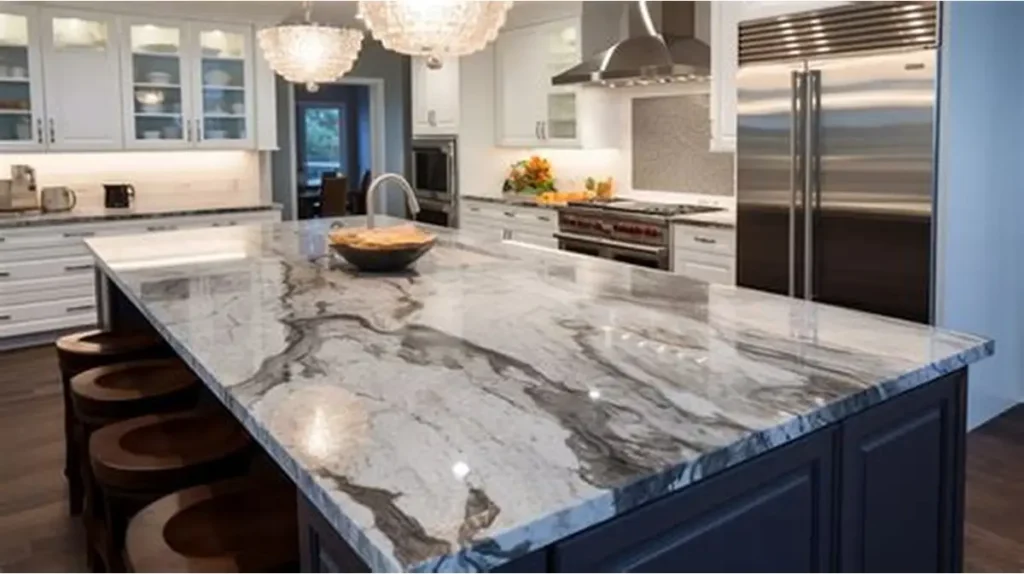
Types of Cracks in Granite Countertops
Before jumping into how to fix cracked granite, you need to know what kind of crack you’re dealing with.
1. Hairline cracks in granite
Hairline cracks are:
- Very thin (often barely felt with a fingernail)
- Usually confined to the surface
- Common in high-stress areas like sink cutouts or range openings
They often result from:
- Minor structural movement
- Small installation stresses
- Temperature changes
Hairline cracks in otherwise solid granite are often cosmetic and can be disguised by polishing granite surfaces, color-matched resins, and routine maintenance.
2. Fissures vs cracks
Fissures are natural features in granite stone:
- Thin, thread-like lines within the stone
- Usually not open or separated
- Visible but smooth to the touch
Fissures are part of the stone’s natural vs. engineered granite character and don’t necessarily mean failure. Cracks, by contrast, show separation and may catch a fingernail.
3. Structural cracks in granite
Structural cracks are more serious:
- Visible separation or height difference between sides
- Often run across unsupported spans (overhangs) or weak points (seams, sink rails)
- May move slightly if pressure is applied
These cracks can indicate:
- Poor support or substructure
- Impact damage
- Slab defects or stress from cabinets or appliances
Structural cracks require more than cosmetic repair—they often need reinforcement plus bonding, or in severe cases, partial replacement.
Step-by-Step: How to Fix Cracked Granite (Hairline & Minor Cracks)
Important: If your crack is wide, deep, or crosses a seam or flimsy support, consult a professional stone repair specialist. DIY is best for minor, non-structural cracks.
Step 1: Clean granite countertops thoroughly
You can’t fix what’s dirty. Start by cleaning.
- Wipe the cracked area with warm water and a few drops of mild dish soap or stone-safe cleaner.
- Use a soft cloth to remove oil, residue, and debris from the crack.
- Rinse with clean water and dry completely.
If your counters look dull or cloudy overall, consider a deeper clean as part of a broader restoration:
Clean, dry stone is essential for adhesives and resins to bond properly.
Step 2: Assess the depth and movement of the granite crack
Gently explore the crack:
- Run your fingernail across it. Does it catch?
- Press lightly on both sides. Do you see movement or flex?
- Is there a height difference (lippage) between the two sides?
If you see visible movement or height difference, you’re in structural-crack territory—call a pro. If not, you may be able to stabilize and fill the crack yourself.
Step 3: Choose the right granite crack repair method
For minor or hairline cracks in granite, you typically have two repair approaches:
- Clear or tinted epoxy/urethane resin
- Fills the crack and bonds the stone
- Can be polished flush with the surface
- Works best when the stone is otherwise stable
- Professional color-matched resin injection
- Ideal for longer cracks across visible areas
- Requires tools and skills most homeowners don’t have
For DIY repairs, look for a stone-specific epoxy or resin kit recommended for repairing chips in granite and minor cracks.
Step 4: Mask and prepare the cracked granite
- Apply painter’s tape along both sides of the crack to protect surrounding stone.
- Use a soft brush or compressed air to remove fine dust from the crack.
- Wipe with isopropyl alcohol to remove any remaining oils (then let dry).
Masking helps keep your clean granite countertops from getting smeared with excess resin during the repair.
Step 5: Fill the granite crack with resin or epoxy
Follow the directions on your chosen product, but the general process is:
- Mix the resin/epoxy according to manufacturer instructions.
- Apply the resin along the crack, working it into the opening with a small spatula, toothpick, or plastic blade.
- Overfill slightly to account for any shrinkage and for later leveling.
- Use a razor blade (if recommended) to gently scrape off excess from the taped areas before full cure.
Allow the repair to cure the full recommended time—usually several hours or overnight.
Step 6: Level and polish granite surfaces after repair
Once the resin has cured:
- Remove the painter’s tape carefully.
- Use a razor blade held almost flat to shave any raised excess along the crack (if needed).
- Lightly buff the area with fine polishing compound or pads designed for stone:
- The goal is to blend the gloss and texture with the surrounding surface.
For larger repairs or older tops, a more comprehensive refinish may be ideal:
That’s also where the question Can Granite Countertops Be Refinished? becomes relevant—yes, refinishing often gives cracked or worn tops a second life.
Step 7: Seal granite after crack repair
After the crack is filled and polished, protect your work.
Sealing granite:
- Clean and dry the entire countertop.
- Apply a penetrating granite sealer per product instructions.
- Let the sealer dwell to penetrate the stone and any micro-voids in the repaired area.
- Wipe off excess and buff with a clean cloth.
Sealing helps with:
- Removing stains from granite more easily
- Protecting porous areas near the repair
- Maintaining the overall look and hygiene of the surface
When Cracked Granite Means Replacement, Not Repair
Sometimes how to fix cracked granite really means how to decide whether to replace it.
Consider replacement if:
- The crack is wide and runs across a major span (especially unsupported overhangs).
- There’s movement or flex when you press on the stone.
- The crack runs through a seam or weak sink rail that has already failed.
- The granite broke due to poor installation or structural issues that can’t be corrected.
At this stage, it’s helpful to weigh:
- Granite countertop cost for repair vs replacement
- Whether you love your existing color or want a new look
- Long-term durability vs a short-term cosmetic fix
If replacing, explore:
- Where to buy granite countertops locally
- Affordable granite countertop options vs premium stones
- Visiting wholesale granite suppliers to hand-select slabs
Cracked Granite in a Natural Stone Countertop Comparison
Seeing a crack might make you wonder if you chose the right material. Here’s how granite compares:
Granite vs quartz countertops
- Granite
- 100% natural, refinishable, repairable
- More tolerant of heat
- Needs periodic sealing
- Quartz
- Engineered and non-porous, no sealing
- Better ordinary stain resistance
- Less tolerant of direct high heat due to resins
Some quartz cracks can be harder to repair invisibly than granite, which can often be honed and repolished.
Granite vs marble: pros and cons
- Marble is softer, more prone to scratches, etching, and cracks in busy kitchens.
- Granite is harder and more forgiving, making it a more practical choice for most families.
Granite vs soapstone durability
- Soapstone is non-porous but soft and easy to ding or scratch.
- Granite offers better scratch resistance and keeps its polish longer.
Granite better than concrete countertops
- Concrete countertops can crack from shrinkage, movement, or poor reinforcement.
- Granite is naturally strong, easier to maintain, and usually simpler to repair—one more reason many homeowners find granite better than concrete countertops in the long run.
Design & Aardwolf: Turning a Crack into an Upgrade Opportunity
If you’re repairing a crack now but thinking about a future refresh, it’s worth planning with higher-quality stone and installation in mind.
The Aardwolf granite countertop collection can help you:
- Upgrade to Aardwolf premium granite slabs selected for durability and aesthetics
- Choose from some of the best Aardwolf granite colors to match your cabinets, floors, and style
- Pair granite with cabinet colors thoughtfully, whether you’re drawn to a bright white granite countertop or dramatic black granite countertops
With Aardwolf granite installation services, you can expect:
- Professional templating and layout planning
- Proper support, seam placement, and reinforcement (preventing many future cracks)
- Correct initial sealing and finishing
And the Aardwolf granite pricing guide helps you:
- Understand your options from affordable granite countertop options to higher-end stones
- Balance cost, performance, and design
- Avoid the false economy of cheap but poorly installed stone that may crack again
Final Thoughts: How to Fix Cracked Granite the Smart Way
Cracks in granite are alarming—but they aren’t always the end of the story. Unlike fragile shale, granite stone is strong, repairable, and often refinishable.
To recap how to fix cracked granite:
- Identify the crack type – hairline, fissure, or structural.
- Clean granite countertops thoroughly before any repair.
- Mask the area and fill the crack with appropriate resin or epoxy.
- Level and polish granite surfaces to blend the repair.
- Seal granite afterward to protect both the stone and the repair.
- For severe cracks, weigh repair vs replacement and consider upgrading with high-quality slabs and professional installation.