

Finding a big black Sharpie streak across your beautiful granite countertop is the kind of surprise nobody wants. Whether a kid used your island as an “art board” or a marker rolled open during a project, you’re probably wondering:
Is permanent marker really permanent on granite stone?
And how do I get Sharpie off granite without damaging the surface?
The good news: with the right products and a gentle approach, you can usually remove Sharpie from granite countertops safely—especially if your stone is properly sealed.
This guide will walk you through:
- Why Sharpie ink clings to granite
- Safe methods to remove permanent marker from granite
- What NOT to use on granite
- How to protect and maintain clean granite countertops afterward
- How this fits into granite choices, cost, and designs (including Aardwolf options)

Understanding Granite Stone and Sharpie Stains
To understand how to get Sharpie off granite, it helps to know a little about granite geology and composition.
What granite is made of (and why that matters for stains)
Granite stone is a natural igneous rock made of:
- Quartz – very hard and glassy
- Feldspar – usually white, cream, gray, or pink
- Mica and other dark minerals – create specks and veins
These minerals lock together in a strong crystalline structure, which gives the key characteristics of granite:
- High durability and scratch resistance
- Excellent heat resistance
- Slight porosity (it’s not completely waterproof without a sealer)
That slight porosity is why sealing granite is so important. A good sealer helps keep inks, dyes, coffee, and oily residues from soaking into the stone. If your sealer is worn or missing, Sharpie can penetrate deeper and be harder to remove.
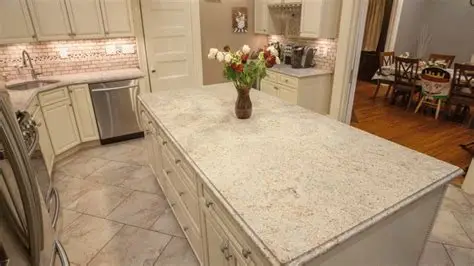
Step 1: Check the Sealer Before You Treat Sharpie on Granite
Before you reach for alcohol or any cleaner, quickly check whether your granite is sealed.
Simple water test
- Put a few drops of water on the granite near (but not on) the Sharpie mark.
- Let it sit for 5–10 minutes.
- If the water beads on the surface, your sealer is probably still working.
- If the water darkens the stone quickly, the granite is likely unsealed or the sealer is worn out.
This matters because:
- On well-sealed granite, Sharpie tends to sit closer to the surface and is much easier to remove.
- On unsealed granite, ink can seep deeper, so you may need a more patient, layered approach to fully remove the stain.
Step 2: Start With Gentle Cleaning on Granite Countertops
Even for permanent marker, you always want to start with the least aggressive method.
Basic cleaning for Sharpie on granite
- Mix a mild solution
- A few drops of gentle dish soap in warm water.
- Avoid citrus or vinegar-based soaps on natural stone.
- Dampen a microfiber cloth
- Wring out excess water so it’s not dripping.
- Gently wipe the marker area
- You may lighten new or superficial lines slightly.
- Don’t scrub aggressively—this can spread the stain and wear the sealer.
This won’t remove deep Sharpie ink, but it clears away surface dirt and oils so your next steps can focus on the ink itself.
Step 3: Use Rubbing Alcohol to Remove Sharpie from Granite
One of the safest and most effective first-line treatments for removing Sharpie from granite is rubbing alcohol (isopropyl alcohol).
How to use rubbing alcohol on granite
- Test first
- Apply a bit of alcohol in an inconspicuous corner to ensure it doesn’t dull or haze the surface.
- Apply to the Sharpie mark
- Dampen a cotton ball, soft cloth, or cotton swab with rubbing alcohol.
- Gently dab it directly on the marker line—don’t flood the area.
- Lift, don’t smear
- Blot and lightly rub in small circles.
- As the ink lifts, switch to a clean part of the cloth to avoid re-depositing the marker.
- Rinse and dry
- Wipe with a damp cloth (plain water) to remove residue.
- Dry with a clean microfiber towel.
On well-sealed, polished white granite countertops or darker black granite countertops, this may be enough to remove most Sharpie marks.
Step 4: Try a Baking Soda Paste for Stubborn Sharpie Stains
If rubbing alcohol only fades, but doesn’t fully remove the Sharpie, a baking soda paste can help pull pigment from the surface without scratching granite.
Baking soda paste method
- Make the paste
- Mix baking soda with a small amount of water until it’s thick—like toothpaste.
- Apply to the stained granite
- Spread a thin layer over the Sharpie line.
- Avoid spreading it far beyond the stained area.
- Let it sit
- Leave it for 15–30 minutes to work on the ink.
- Gently rub and wipe away
- Using a microfiber cloth, lightly rub the paste over the stain.
- Wipe off with a damp cloth and then dry.
If the stain persists, repeat or combine the baking soda paste with your alcohol treatment: alcohol to dissolve ink, baking soda to absorb what’s brought to the surface.
Step 5: Using Acetone Carefully on Granite (Last Resort DIY)
For very stubborn Sharpie marks on granite stone, you can carefully use acetone (often in nail polish remover). This is stronger than rubbing alcohol, so caution is key.
Always test acetone in a hidden area first, and avoid extended contact with the stone.
How to use acetone on granite
- Spot test
- Apply a little acetone to a hidden spot.
- Check for dullness, haze, or damage after drying.
- Apply to Sharpie carefully
- Dampen a cotton swab or pad with acetone—do not pour directly onto the granite.
- Dab gently on the ink line. Allow it to sit for 30–60 seconds.
- Lift the ink
- Wipe the area with a microfiber cloth.
- Repeat in short intervals rather than soaking the stone.
- Rinse thoroughly
- Clean with mild dish soap and water afterward to remove any residue.
- Dry completely.
If the area looks slightly dull after acetone use, professional polishing granite surfaces or a granite-safe polish can help restore the sheen.
Step 6: When to Call a Professional for Granite Marker Stains
If you’ve tried:
- Mild soap
- Rubbing alcohol
- Baking soda paste
- Careful acetone application
…and the Sharpie stain is still clearly visible (especially on light stone), it might be time to call in a stone care professional. They can:
- Use specialized poultices or solvents
- Carefully hone and polish granite surfaces
- Re-seal the area or the whole countertop
This is particularly worth it for premium installs, like a large island or high-end materials from the Aardwolf granite countertop collection or other Aardwolf premium granite slabs.
Resealing Granite After Removing Sharpie
Removing Sharpie, especially with solvents, can weaken or strip the sealer and leave your stone more vulnerable to future stains.
How to check if your granite needs resealing
- Place a few drops of water on the cleaned area.
- If the water beads for several minutes, your sealer is still working.
- If the stone darkens quickly, it’s time to seal granite again.
Resealing:
- Protects both white granite countertop and dark stones from new stains
- Makes future removing stains from granite (coffee, water, or even accidents like Sharpie) much easier
- Helps maintain that “like new” look for clean granite countertops
Preventing Sharpie and Marker Stains on Granite
Once you’ve done the hard work of removing permanent marker, it’s worth adjusting a few habits:
- Keep Sharpies and permanent markers in a drawer away from main work zones.
- Use mats or paper when kids do homework or art at the counter.
- Avoid writing labels, boxes, or posters directly on granite stone surfaces.
Simple steps go a long way when you’ve invested in quality stone.
Granite Care Beyond Sharpie: Rust, Water, Coffee & Superglue
Sharpie isn’t the only thing that can mark granite. For a complete natural stone countertop comparison and care routine, you’ll also want to know how to tackle other common problems:
- Rust stains on granite
- Caused by metal cans, tools, or racks left wet on the surface.
- Learn more:
👉 How to Get Rust off Granite
- Water stains or mineral deposits
- Often appear as cloudy white rings or spots around sinks.
- Learn more:
👉 How to Remove Water Stains from Granite
- Coffee stains on granite
- Common near coffee makers and mugs on granite countertops.
- Learn more:
👉 How to Remove Coffee Stains from Granite
- Superglue on granite
- From DIY crafts or repairs gone sideways.
- Learn more:
👉 How to Remove Superglue from Granite
These guides, combined with regular sealing granite, will help you keep every part of your stone surface in top shape.
Granite vs Other Countertop Materials for Stain Resistance
Understanding how to get Sharpie off granite also gives you insight into how granite compares with other materials.
Granite vs quartz countertops
- Granite
- Natural, unique mineral patterns
- Needs sealing, but stands up well to heat and daily wear
- With proper sealing, marker and stains can usually be removed
- Quartz (engineered)
- Non-porous, excellent everyday stain resistance
- More sensitive to high heat near hot pans
- Marker removal is generally easier, but harsh cleaners can affect the resin binders
Granite vs marble: pros and cons
- Granite
- Harder and less prone to scratching and etching
- More forgiving for busy kitchens with kids, crafts, and heavy use
- Marble
- Softer and more easily etched by acids and certain cleaners
- More demanding maintenance when it comes to inks and dyes
Granite vs soapstone durability
- Granite – denser and more scratch-resistant overall
- Soapstone – softer and scratches more easily, but non-porous and often chosen for a matte, rustic look
Granite better than concrete countertops?
- Granite typically:
- Requires less ongoing sealing than concrete
- Has fewer issues with cracking
- Provides a more naturally stain-resistant, polished surface
In most natural stone countertop comparison scenarios, granite offers an excellent balance of durability, beauty, and manageable maintenance—even when it comes to “disasters” like Sharpie.
Granite Cost, Options, and the Role of Aardwolf Granite
When you’ve invested in stone, getting Sharpie off without damage is part of protecting that investment.
Granite countertop cost & options
Granite countertop cost can depend on:
- Rarity and color pattern of the stone
- Slab thickness and size
- Complexity of cuts, seams, and edges
- Local labor and installation requirements
For affordable granite countertop options, many homeowners:
- Choose more common colors and grain patterns
- Work with established wholesale granite suppliers
- Use standard 2 cm or 3 cm thickness and simpler edges
Aardwolf granite countertop collection
Curated ranges such as the Aardwolf granite countertop collection can help you:
- Pick from a wide range of best Aardwolf granite colors that work with your cabinets and floors
- Understand budget and premium options through an Aardwolf granite pricing guide
- Select Aardwolf premium granite slabs that balance aesthetics with durability
- Rely on professional Aardwolf granite installation services to make sure heavy slabs are installed safely and properly supported
From granite backsplash designs to pairing stone with cabinet colors, choosing the right granite up front and maintaining it well—including knowing how to get Sharpie off granite—ensures your kitchen looks good and lasts for years.
Final Thoughts: Sharpie Isn’t the End for Granite
To recap, here’s how to safely get Sharpie off granite:
- Start with mild dish soap and water to clean the area.
- Use rubbing alcohol to lift most permanent marker lines.
- Try a baking soda paste for persistent stains.
- Use acetone sparingly as a last-resort DIY option, with testing.
- Rinse well, dry thoroughly, and reseal if needed.
- Call a professional if the stain is deep or the finish is damaged