

If your black granite countertops used to gleam like a mirror but now look streaky, hazy, or flat, you’re not alone. Even the most durable granite stone can lose luster from everyday life—soap film, cooking oils, hard-water minerals, and the wrong cleaners. The good news: with the right routine and products, black granite can recover that inky, liquid-glass shine and keep it for the long haul.
This expert playbook explains why black granite dulls, the materials to use (and avoid), and a step-by-step system to deep-clean, polish, and (only when needed) seal. You’ll also find pro tips for different finishes (polished, honed, leathered), stain troubleshooting, and a maintenance schedule that actually works for busy kitchens.

Why Black Granite Loses Its Shine
Black granite’s dramatic gloss comes from a factory-polished surface that allows light to pass into and reflect off its crystalline minerals. Over time, the optical clarity is reduced by:
- Residue buildup: Dish soaps, all-purpose sprays, and aerosol “shine” polishes leave films that scatter light.
- Hard-water scale: Mineral deposits around sinks and faucets create a gray, chalky cast—most visible on black granite countertops.
- Grease & micro-grit: Cooking aerosols and fine dust cling to textured areas and edges.
- Harsh or mismatched cleaners: Vinegar, lemon, bleach, ammonia, abrasive powders, and glass cleaner can etch or mattify the surface or strip sealer.
- Sealer haze: Excess sealer left sitting on the surface (instead of wiped off) dries into a cloudy film.
Understanding these culprits shapes a routine that restores clean granite countertops to a deep, even, reflective finish.
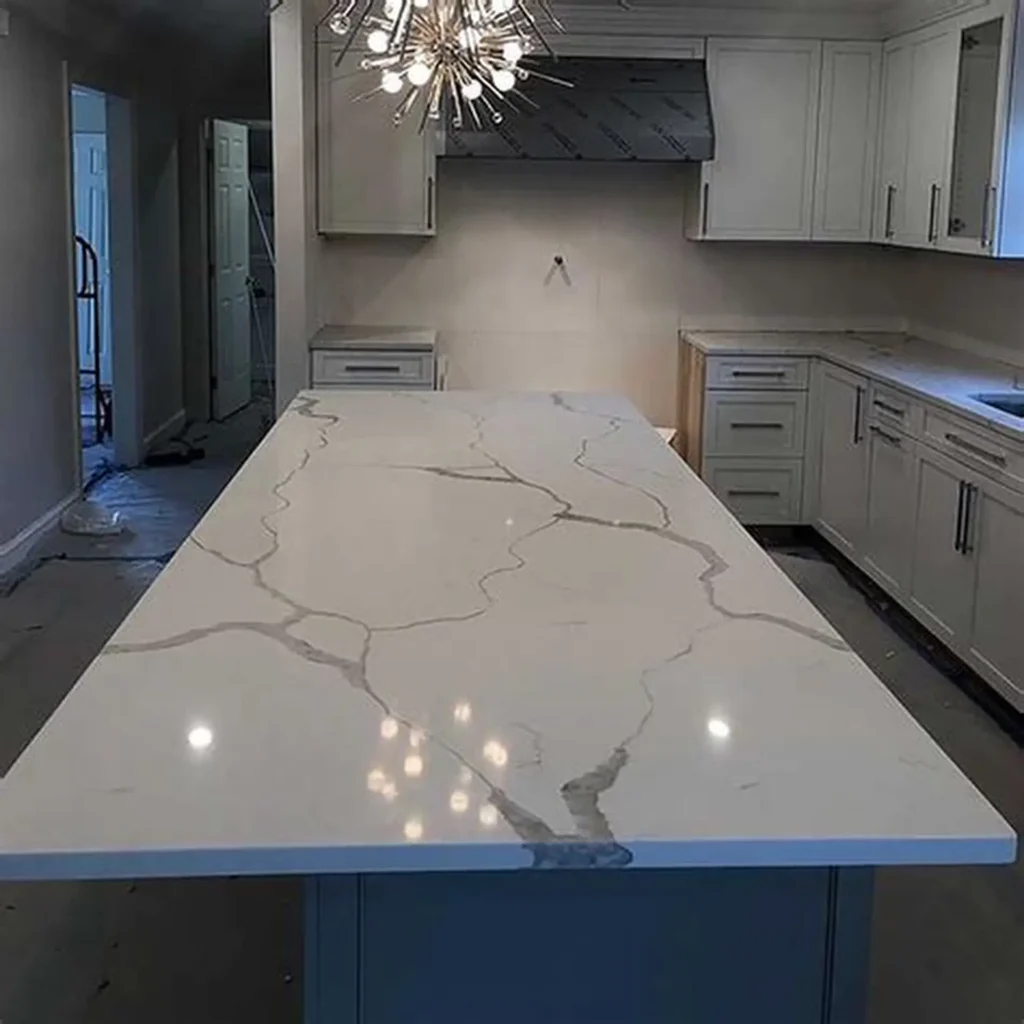
Materials You’ll Need (Stone-Safe Only)
- Soft, edgeless microfiber cloths (several)
- pH-neutral stone cleaner for routine wipes
- Stone-safe degreaser for cooking zones and oily film
- Stone-safe descaler to treat lime and calcium at sinks/faucets
- Granite polishing cream or stone polish (non-wax, non-acid)
- Optional: 70% isopropyl alcohol for streak relief on dark slabs
- Nitrile gloves; good ventilation
Avoid: vinegar, citrus cleaners, bleach, ammonia, abrasive powders, melamine sponges, and glass cleaners. These can dull polish and degrade sealers—especially obvious on darker stones.
Quick Tests Before You Start
1) Film vs. Absorption Check
- Tape test (film): Press painter’s tape on a hazy patch, burnish, peel. If the taped rectangle looks clearer, you’re dealing with surface film—cleaning + polishing is your fix.
- Water-drop test (absorption): Place a teaspoon of water for 10–30 minutes; if it darkens the stone, that area may need sealing after cleaning and polishing. If no darkening, skip sealer and focus on residue removal and polish.
Step-by-Step: Make Black Granite Shine Again
Step 1: Dry Dust
Use a clean, plush microfiber to lift grit and crumbs. This prevents micro-scratching during wet cleaning—crucial for the impeccable reflection you want on polished black slabs.
Step 2: Stone-Safe Deep Clean
- Spray pH-neutral stone cleaner over a small section.
- Wipe in overlapping passes. Flip or replace the cloth as it loads with residue.
- For greasy areas, apply a stone-safe degreaser; dwell as directed, then wipe and rinse with a lightly damp cloth.
- At sinks/faucets, treat mineral crust with a stone-safe descaler; rinse thoroughly.
Step 3: “Slick-Dry” Buff
Immediately buff dry with a fresh microfiber. Drying is the secret to a mirror-like finish—water left to air-dry can leave spots and streaks (especially on black granite countertops).
Pro tip for dark stone: Lightly mist 70% isopropyl alcohol and quickly buff dry to lift the final trace of oily film. (Use sparingly; it’s a finishing touch, not a daily cleaner.)
Step 4: Hand Polish for Optical Depth
- Confirm the surface is clean and bone-dry.
- Apply a pea-sized dot of granite polishing cream to a folded microfiber.
- Work a 2–3 sq ft section in tight circles with light pressure.
- Buff off immediately with a second, dry microfiber—don’t let polish dry on the surface.
- Repeat edge to center across the top. Less product, more buffing = crisp reflectivity.
For more polishing technique and product styles, review:
- How to polish granite countertops
- How to polish granite by hand
- How to shine granite countertops
- How to make granite shine
Step 5: Seal Only If Needed
Sealers don’t add gloss—they reduce absorption and staining. If the water-drop test showed darkening:
- Apply a thin, even coat of impregnating sealer to that area.
- Allow the recommended dwell time so sealer penetrates the pores.
- Buff off all excess before it dries—sealer belongs in the stone, not on top.
- Respect the cure time (often 24–72 hours) before heavy use or polishing.
Finish-Specific Guidance
Polished Black Granite
- Achieves the strongest mirror effect.
- Responds dramatically to residue removal and a light cream polish.
- Skip waxes/acrylic “wet-look” coatings; they attract dust and smear.
Honed Black Granite
- Intentionally matte/satin. Aim for a rich, even glow, not a mirror finish.
- Stone-safe cleaning and a light polish can improve color depth without changing finish type.
Leathered/Brushed Black Granite
- Texture hides fingerprints but traps film in micro-valleys.
- Use minimal product, thorough degreasing, and meticulous dry buffing.
Troubleshooting Common Issues
1) Cloudy Haze That Won’t Quit
Likely soap film or sealer residue. Re-clean with stone degreaser, rinse, dry buff; repeat once. If haze persists, apply a very light polish and buff completely off.
2) Streaks on Black Granite
Use less liquid and more cloths. Finish with a quick pass of 70% isopropyl alcohol and immediate dry buff.
3) Water Spots & White Rings
Treat with a stone-safe descaler, rinse thoroughly, and dry buff. Re-test that area for absorption; seal selectively if it darkens quickly.
4) Oil or Food Stains
Use a stone poultice matched to stain type (oil vs. tannin). After removal, spot-seal that zone to reduce future absorption.
5) Chips, Nicks, or Micro-Scratches
Polishing improves gloss but doesn’t fill voids. Contact a pro for repairing chips in granite and edge refinishing. Keeping the surface residue-free reduces how visible minor wear appears.
Weekly & Seasonal Maintenance Plan (That Actually Works)
Daily (or after cooking)
- pH-neutral clean → immediate dry buff.
Weekly
- Degrease stove/splash zones.
- Descale sink rims/faucet bases as needed.
- Quick hand-polish on feature areas (islands, bar overhangs).
Seasonally
- Run the water-drop test in multiple zones.
- Seal only where needed—high-use or high-absorption sections (e.g., around sinks) may need more frequent attention than the island.
This approach respects variations in granite geology and composition (even within one slab), and it’s smarter than a rigid “seal every X months” rule.
Design & Use Tips That Enhance Shine
- Use cutting boards to reduce micro-abrasion (and keep knives sharp).
- Wipe spills promptly, especially oils, wine, and coffee.
- Choose complementary finishes: matte hardware and strategic lighting can make polished black granite look even deeper and clearer.
- Pairing with the right cabinet shades and granite backsplash designs can amplify perceived gloss and overall design cohesion.
Frequently Asked Questions
Do I need to polish every week?
No—most kitchens look superb with monthly light polishing on showpiece areas, plus consistent daily clean + dry buff.
Will sealing make it shinier?
No. Sealers don’t increase gloss; they reduce porosity and staining. Gloss comes from a residue-free surface and the original mechanical polish.
Can I use glass cleaner on black granite?
Skip it. Many contain ammonia or acids that can degrade sealer or leave films. Stick with pH-neutral stone cleaners.
What about vinegar for hard water?
Avoid acids (vinegar/lemon). Use a stone-safe descaler specifically formulated for natural stone.
Quick “Shine in Ten” Checklist
- Dry dust with microfiber.
- Clean with pH-neutral stone cleaner.
- Degrease cooking zones; rinse.
- Descale sink/faucet areas; rinse.
- Dry buff until cloth glides.
- Pea-sized dot of stone polish; work 2–3 sq ft.
- Buff off immediately with a fresh cloth.
- Repeat section by section.
- Water-drop test in a few zones.
- Seal only where needed—always buff off excess.