
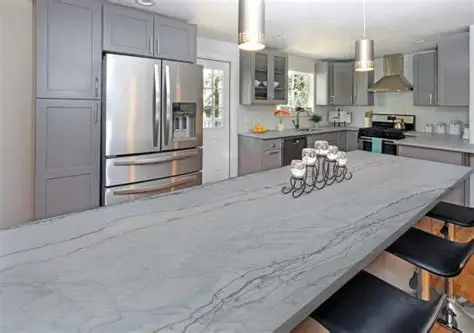
If your granite countertops look a little dull, streaky, or hazy, good news: you can usually bring back that crisp, mirror-like shine with the right routine and products. This guide walks you through daily cleaning, deep de-greasing, limescale removal, and true polishing—plus what not to do. It’s written for busy homeowners and pros alike, and it covers both black granite countertops and lighter stones (including white and grey), polished and honed finishes, and kitchen or granite bathroom countertops.

Key Takeaways
- Real “polish” on granite stone comes from mechanical finishing at the factory or by a fabricator. At home, you preserve and boost shine by proper cleaning, removing film build-up, and (if needed) using a stone-safe polishing cream—not waxes or generic floor polishes.
- Always start with pH-neutral cleaners and microfiber. Avoid vinegar, lemon, bleach, ammonia, bathroom cleaners, glass cleaners, and abrasive powders—they can degrade sealer or cause micro-etching on adjacent non-granite surfaces.
- If you see persistent dull spots, hazy patches, or rough areas that don’t respond to cleaning and polishing, you might be dealing with etching, hard-water scaling, or micro-scratches—each needs a different fix (covered below).
- Sealing granite is separate from polishing. Seal to reduce absorption and stains; polish to enhance gloss and clarity. Many stones need both at different times.

Materials & Tools You’ll Need
- Two or three clean microfiber towels (edgeless, low-lint)
- pH-neutral stone cleaner or a few drops of mild dish soap
- Stone-safe degreaser (for oily film)
- Descaler labeled safe for natural stone (for hard-water/limescale)
- Stone polishing cream (granite-specific, non-wax, non-acrylic)
- Optional: Isopropyl alcohol (70%) for final wipe on greasy zones
- Optional: Impregnating sealer (if water/oil tests indicate absorption)
Tip: If your kitchen gets a lot of cooking oil or overspray, consider a stone-safe degreaser weekly on ranges, backsplashes, and island seating areas before polishing.
Step 1: Clean Granite the Right Way (Daily/Weekly)
Daily cleaning (and after meal prep)
- Dry wipe crumbs with a microfiber towel.
- Spray a pH-neutral stone cleaner (or warm water with a couple of drops of dish soap).
- Wipe in overlapping passes; flip to a dry side to buff dry.
- For black granite countertops, finish with a completely dry microfiber to prevent water spotting and lift any streaks.
Weekly reset (de-grease & de-film)
- Use a stone-safe degreaser in cooking zones or where hands rest (island edges).
- Rinse with a damp cloth and buff dry thoroughly.
Why it matters: Most “dull granite” is just film build-up (oil mist, soap residue, or hard-water minerals). Removing films often restores more shine than any “polish” spray.
Step 2: Diagnose Dullness Before You Polish
Not all dull spots are the same. Quick tests save time:
Water test (for porosity)
Place a teaspoon of water on clean, dry stone.
- If a dark shadow forms in 1–10 minutes, the area is absorbing → it needs sealer (after you finish polishing steps).
- No change after 30 minutes? The slab is dense; sealing may be less frequent.
Tape test (for film)
Stick painter’s tape over a dull patch and press it down. Peel away. If the area under the tape looks glossier, you’re dealing with surface film—clean/de-grease more thoroughly.
Fingernail test (for roughness)
Lightly run a fingernail across dull areas:
- Smooth but cloudy = film/hard water residue.
- Microrough = micro-scratches or etching (rare on granite, common on marble). Granite’s “etching” is usually hard-water or chemical film masquerading as etch.
Step 3: Remove Stubborn Film and Limescale (Shine Booster)
- Degrease: Spray a stone-safe degreaser, dwell per label, agitate with microfiber, rinse with clean water, and dry.
- Descale: If you see ring marks near faucets or on granite bathroom countertops, apply a stone-safe descaler. Work in small sections, rinse thoroughly, and dry.
- Alcohol wipe (optional): In greasy kitchens, wipe with a 70% isopropyl alcohol-damp cloth, then immediately follow with water and dry.
After deep de-greasing/descaling, many tops already look newly polished—especially black granite countertops that show every streak.
Step 4: Use a Granite Polishing Cream (Only When Needed)
A granite-specific polishing cream (or “polish & shine” designed for natural stone) can add clarity and gloss after proper cleaning.
How to apply:
- Ensure the surface is clean and bone dry.
- Apply a pearl-sized amount to a folded microfiber.
- Work in small, circular motions, overlapping each pass.
- Buff off residue immediately with a second, dry microfiber until the cloth glides and the surface pops.
- Repeat only if directed by the product; thin coats beat heavy application.
What to avoid:
- Wax, acrylic, or silicone-heavy products that leave a soft film (they attract dust, streak on dark stones, and can yellow).
- Abrasive powders or pads—they can haze polished granite.
- Generic “polish” sprays not labeled for natural stone.
Step 5: Seal (If Your Tests Show Absorption)
Polishing enhances the look; sealing reduces staining. Do it only where needed, guided by your water/oil tests.
Quick sealing overview:
- Clean and dry thoroughly (after polishing day or the next day).
- Apply an impregnating sealer to wet the surface evenly; let it dwell as directed.
- Buff off all excess before it dries; sealer belongs in the stone, not as a surface film.
- Allow full cure (often 24–72 hours) before heavy use.
For honed or leathered granite, two thin coats may be appropriate—check the label.
Fixing Specific Problems (Troubleshooting)
Oily shadows and fingerprints won’t go away
- Use a stone-safe degreaser.
- If the mark persists, it may be an oil stain—try a poultice designed for oil. After lifting, reseal the area.
White rings/haze near the faucet
- That’s mineral (hard-water) scale. Use a stone-approved descaler. Avoid vinegar—it can degrade sealer and leave streaks.
Cloudy patch after a “polish” product
- You might have a coating buildup. Re-wet the patch with the same product and immediately buff it off completely; or clean with a stone-safe coating remover per label.
Tiny edge chips
- Minor nicks can be softened with a professional edge polishing kit (experienced DIYers) or filled by a fabricator. For a perfect, invisible repair, call a pro.
True re-polishing (restoring factory gloss)
- If your top has micro-scratches or widespread hazing that doesn’t respond to creams, it may need mechanical re-polishing (diamond honing and polishing). That’s a stone fabricator job.
Special Notes by Color & Finish
Black granite countertops (absolute black, black galaxy, etc.)
- Show streaks fastest. Two cloths are essential: one to clean, one to buff dry.
- Avoid waxy products; they can cause blotchiness.
White & light granites
- More prone to oil absorption. Keep up with sealing where tests show darkening.
- Polishing creams add clarity, but don’t skip de-greasing.
Honed & leathered finishes
- Expect a soft sheen rather than a mirror polish; that’s normal.
- Use polishing creams sparingly; they won’t turn a honed top glossy (only mechanical polishing can).
- Seal more frequently if water darkens the surface quickly.
Weekly & Monthly Shine Routine (That Actually Works)
- Daily: pH-neutral clean + dry buff.
- Weekly: Stone-safe degrease in cooking zones; dry buff.
- Monthly (or as needed): Descale around faucets; apply a granite polishing cream to high-visibility areas.
- Semiannual: Water and oil tests in multiple spots; seal only if absorption appears.
This cadence keeps polishing granite surfaces effortless and avoids overusing products that can build up.
Cost & Buying Tips (Smart SEO Nuggets)
- Granite countertop cost varies by color, slab size, and thickness; denser stones may need less frequent sealing, saving on maintenance.
- Buy from local granite countertop showrooms or wholesale granite suppliers that allow in-person slab inspection—look for consistent polish and minimal pitting.
- If you’re hunting affordable granite countertop options, consider remnants for bathroom vanities or small islands.
Granite vs. Other Surfaces (Maintenance Snapshot)
- Granite vs quartz countertops: Granite needs periodic sealing, but it’s typically more heat tolerant. Quartz is lower maintenance but dislikes hot pots.
- Granite vs marble: Granite resists staining and etching better; marble requires gentler care.
- Granite vs soapstone: Soapstone doesn’t need sealer but is softer; many owners oil it for deeper color.
FAQs
Will polishing make my granite slippery?
No—stone-safe polishing creams don’t leave a thick film; they enhance optical clarity. Always buff dry.
Can I use glass cleaner for extra shine?
Avoid it. Many contain ammonia or alcohol blends that can degrade sealer or streak, especially on black granite countertops.
Do I polish before or after sealing?
Polish first, then seal later if tests show absorption. Never trap film or moisture under sealer.
How often should I polish?
Use as needed. Many kitchens look best with a monthly polish in high-traffic zones and just clean + dry buff elsewhere.
Quick SEO Checklist (For Stone Lovers)
- Granite geology and composition impact porosity and shine.
- Separate cleaning, polishing, and sealing steps.
- Choose natural stone-safe products only.
- Test regularly; seal strategically.
- For damage that resists DIY methods, call professional granite installation services or a restoration specialist.
- https://allslabs.net/do-you-have-to-seal-granite-countertops/
- https://allslabs.net/does-granite-need-to-be-sealed/
- https://allslabs.net/how-often-to-seal-granite-countertops/
- https://allslabs.net/how-often-should-you-seal-granite-countertops/
The Bottom Line
To polish granite countertops like a pro, treat polishing as the third step—after film removal and hard-water cleanup, and before any sealing you choose to do. With the right routine, your natural stone countertop will keep its deep, reflective glow—whether it’s a bold black granite countertop, a bright white island, or a nuanced grey with movement—and you’ll extend the life of both the polish and the sealer.