
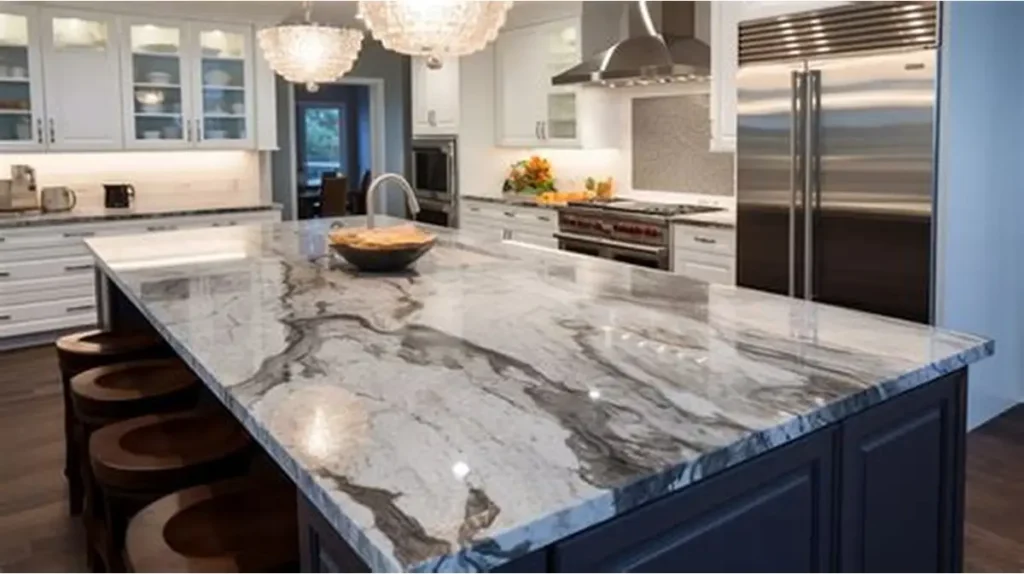
Water spots on granite are sneaky. One day your countertops look flawless, and the next you notice a light ring by the faucet or a cloudy patch around the sink. The good news: most water stains on granite are fixable if you use the right, stone-safe methods.
This guide walks you through:
- What water stains on granite really are
- The characteristics of granite that affect staining
- Step-by-step methods to remove light and stubborn water stains
- What not to use on granite
- How to prevent future stains and protect your investment
- How this ties into choosing and caring for the Aardwolf granite countertop collection

Understanding Granite Stone and Water Stains
What is granite, really?
Granite is a natural igneous rock formed when molten magma cools slowly deep inside the Earth. That slow cooling creates visible crystals of:
- Quartz
- Feldspar
- Mica
- Small accessory minerals
That mix of minerals gives granite stone its strength, unique patterns, and huge range of colors—from soft white granite countertop styles to dramatic black granite countertops.
At the same time, granite is a porous natural stone. It’s much less porous than marble, but there are still tiny pores where water and minerals can sit if the surface isn’t sealed well.
What do water stains on granite look like?
Water-related issues on granite usually show up in three main ways:
- Light water rings or marks
- Faint, cloudy, or slightly darker/lighter spots where glasses or bottles sat.
- Hard water stains / mineral buildup
- Chalky, white crust or halos around faucets, soap dispensers, or sink edges.
- Caused by minerals like calcium and magnesium left behind as water evaporates.
- Dark moisture spots
- Areas that stay darker after water exposure because moisture has penetrated slightly into the stone or sealer.
The right removal method depends on which of these you’re dealing with.
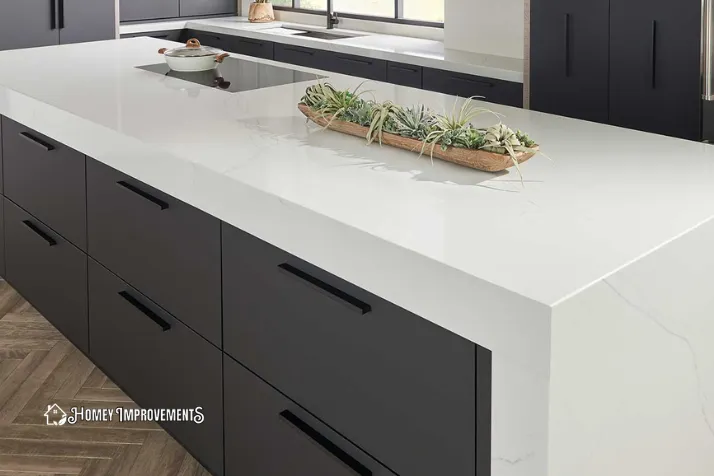
Granite Characteristics That Affect Staining
The characteristics of granite that matter for water stains:
- Porosity – Some granites are denser than others. More porous stones show water marks more easily if not sealed.
- Finish – Polished surfaces tend to resist staining better than honed or leathered finishes, which can show marks more readily.
- Sealer condition – A good penetrating sealer dramatically reduces water absorption and makes cleanup easier.
That’s why sealing granite regularly is one of the best ways to prevent long-term water stain problems.
What You Should Never Use on Granite
Before we jump into cleaning steps, it’s important to avoid products that can permanently damage granite:
- No vinegar or lemon juice – Both are acidic and can etch or dull stone over time.
- No bleach or harsh chemical cleaners – These can break down the sealer and cause discoloration.
- No abrasive powders or scouring pads – They scratch the surface and wear away the finish.
- No undiluted hydrogen peroxide on dark granite – It can lighten the color and weaken the sealer.
Stick with pH-neutral, granite-safe cleaners and gentle techniques. This is the same expert advice recommended by major home and cleaning publications for natural stone.
How to Remove Light Water Stains from Granite
Light water rings or faint marks are often just surface residue and are the easiest to fix.
Step 1: Basic cleaning
- Mix a few drops of mild dish soap in warm water.
- Dampen a soft microfiber cloth in the solution.
- Gently wipe the stained area in small circles.
- Rinse with clean water to remove any soap film.
- Dry thoroughly with a clean cloth.
If the stain disappears, you’re done. If you still see a faint outline or cloudy patch, move on to a slightly deeper method.
Step 2: Baking soda paste for water spots
For more stubborn water rings or mild mineral haze:
- Make a paste
- Mix baking soda with a little water until it’s the consistency of thick yogurt.
- Apply the paste
- Spread a thin layer over the water mark.
- Let it sit
- For lighter stains, 1–2 hours may be enough. For older spots, lightly cover with plastic wrap and leave it overnight.
- Wipe, rinse, and dry
- Remove the paste with a damp cloth, rinse well, and buff dry.
Baking soda is mildly abrasive but safe when used gently and is often recommended in professional granite stain guides.
How to Remove Hard Water and Mineral Buildup on Granite
Hard water stains are a bit different: you’re dealing with actual mineral deposits sitting on top of the surface (often around faucets, soap dispensers, and sink edges).
Step 1: Loosen scale with soapy water
- Soften the area with warm, soapy water and a soft cloth.
- Gently scrub to see if any buildup lifts off easily.
If the white haze or crust remains, move to a targeted approach.
Step 2: Use a granite-safe limescale or hard-water cleaner
- Choose a product specifically labeled safe for granite or natural stone—never generic bathroom descalers.
- Apply as directed on the label, usually allowing it to sit for a few minutes.
- Gently scrub with a soft-bristle brush or non-scratch pad.
- Rinse thoroughly and dry.
Step 3: Carefully use a razor (optional and advanced)
Some stone pros may use a single-edge razor blade held nearly flat to carefully lift thick mineral crusts:
- Only on polished granite (not honed or leathered finishes).
- Always keep the area wet and apply extremely light pressure.
If you’re not comfortable with this, skip it and stick to stone-safe cleaners.
How to Remove Dark Water Marks from Granite
Dark water stains—where the stone looks darker in one patch—are often moisture absorbed past the surface or older, set-in water marks.
These may require a poultice to draw the moisture or minerals out of the pores.
Step 1: Create a poultice
- Mix baking soda with water (or with a granite-safe cleaner designed for stains) into a thick paste.
- Spread the paste over the stained area about 3–5 mm thick.
Step 2: Cover and wait
- Cover with plastic wrap.
- Tape down the edges to keep it moist.
- Leave it for 12–24 hours so the poultice can pull impurities out of the stone.
Step 3: Remove, rinse, and dry
- Peel off the plastic, gently scrape away dried paste.
- Rinse with clean water and wipe dry.
- Allow the area to air-dry completely before judging the final result (sometimes it looks darker while damp).
Severe or long-standing dark stains may need more than one poultice cycle or professional restoration.
When Water Stains Aren’t Just Water
Sometimes what looks like a “water” spot is actually oil, soap scum, or rust:
- Oily rings or dark, greasy spots will require an oil-drawing poultice rather than a simple water-stain treatment. See:
- Orange-brown marks near metal objects or drains might be rust, not water. In that case, follow a rust-specific approach, such as:
Correctly identifying the stain type will save you time and protect your countertop.
Protecting Granite: Sealing, Cleaning, and Polishing
Sealing granite regularly
Because granite is naturally porous, sealing granite is essential:
- Apply a high-quality penetrating sealer as recommended (often annually for busy kitchens).
- The sealer sinks into the stone and reduces liquid absorption, making removing stains from granite much easier.
Daily habits for clean granite countertops
To keep your clean granite countertops looking their best:
- Wipe spills immediately—especially around sinks and faucets.
- Use coasters under glasses and bottles.
- Clean daily with mild dish soap or a pH-neutral granite cleaner and a microfiber cloth.
Repairing chips and polishing granite surfaces
- For edge chips or small dings, consider repairing chips in granite with professional epoxy work.
- If high-traffic areas look dull, polishing granite surfaces with stone-safe products—or having them professionally re-polished—can restore an even shine.
How Water Stains Fit into the Bigger Countertop Picture
Dealing with water stains often leads homeowners to compare materials and plan future upgrades.
Granite vs quartz countertops
- Granite
- Natural stone with unique patterns
- Needs sealing but offers superior heat resistance
- Occasionally shows water or mineral marks if not maintained
- Quartz (engineered)
- Very consistent in color and pattern
- Generally non-porous, but resins are more sensitive to heat
Granite vs marble: pros and cons
- Granite: tougher, less prone to etching, better for busy kitchens.
- Marble: softer, more delicate, chosen mainly for its classic veining.
Granite vs soapstone durability & concrete
In a natural stone countertop comparison:
- Granite usually wins on overall durability and everyday practicality.
- Soapstone is softer, more prone to scratching, but naturally non-porous.
- Concrete can be beautiful but needs more sealing and can crack, making granite better than concrete countertops for many households.
Cost, Design, and Aardwolf Granite Options
If water stains have you thinking about an upgrade or expansion, it’s helpful to understand granite countertop cost and options.
Granite countertop cost factors
Pricing depends on:
- Rarity and color of the stone
- Slab thickness and size
- Edge profiles and custom cuts
- Local fabrication and installation rates
For affordable granite countertop options, look at standard colors and work with reputable fabricators or wholesale granite suppliers.
An Aardwolf granite pricing guide (from your local distributor or showroom) can help you compare:
- Entry-level stones
- Mid-range selections
- Premium or exotic Aardwolf premium granite slabs
Where to buy granite countertops
Explore:
- Local stone yards and kitchen/bath showrooms
- Fabricators who source from the Aardwolf granite countertop collection
- Full-service providers offering templating, cutting, and Aardwolf granite installation services
They can also help you choose the best Aardwolf granite colors for:
- White granite countertop designs in bright kitchens
- Black granite countertops for strong contrast
- Coordinated granite backsplash designs and cabinet pairings
Final Thoughts: Keep Granite Spot-Free and Stunning
To recap:
- Water stains on granite are usually caused by standing water, mineral deposits, or absorbed moisture—not permanent damage.
- Start with gentle cleaning, then step up to baking soda pastes or poultices and granite-safe hard water cleaners for tougher spots.
- Avoid harsh chemicals and abrasives that can damage the stone or sealer.
- Protect your investment with regular sealing, good daily cleaning habits, and prompt attention to stains.