

Water is harmless… until it leaves ugly rings and cloudy patches on your granite. If you’ve noticed dull circles around the faucet, hazy spots by the soap dispenser, or dark patches that don’t go away after wiping, you’re dealing with water stains or mineral buildup on your granite stone.
The good news: most water stains on granite can be removed at home without damaging the surface—if you use the right, stone-safe methods.
In this guide, you’ll learn:
- Why granite gets water stains in the first place
- How to tell what kind of water stain you’re dealing with
- Step-by-step methods to remove water rings, hard water deposits, and dark moisture marks
- What not to use on granite
- How this ties into long-term granite care, cost, and design choices
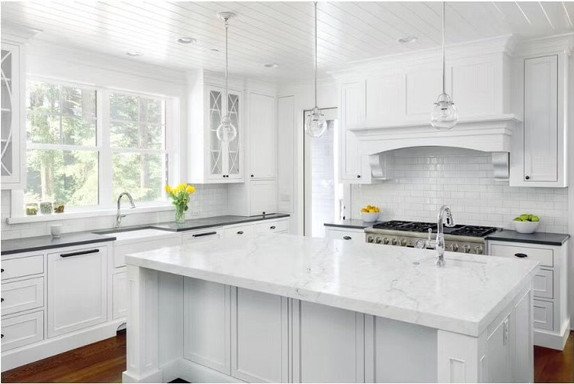
Why Does Granite Get Water Stains?
A quick look at granite geology and composition
Granite stone is a natural igneous rock formed when magma cools slowly deep underground. That slow cooling creates visible crystals of:
- Quartz – adds hardness and scratch resistance
- Feldspar – controls much of the background color
- Mica & accessory minerals – create flecks, sparkles, and unique patterns
Because of this mineral mix, granite is:
- Very hard and durable
- Heat resistant
- Naturally porous – not as porous as marble, but it still has microscopic channels that can absorb water and dissolved minerals over time
That porosity is why sealing granite is so important—and why water stains can happen if the sealer is worn or water is left standing.
Natural vs. engineered granite and water marks
When people say “granite countertops,” they usually mean natural granite, but you’ll also hear comparisons with engineered quartz:
- Natural granite (true granite stone)
- Needs periodic sealing
- Resists heat very well
- Can show water spots and mineral buildup if water sits too long
- Engineered quartz (not granite, but often compared)
- Non-porous surface
- Less prone to water stains
- More sensitive to high heat
Understanding this natural vs. engineered granite distinction helps set realistic expectations about water stains and maintenance.
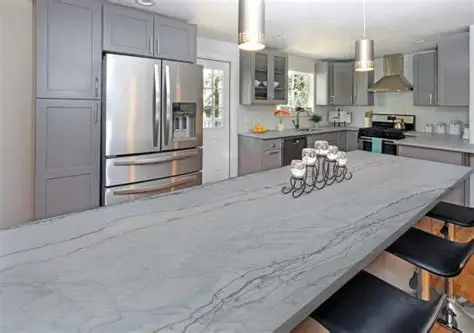
Types of Water Stains on Granite Countertops
Not every “water stain” is the same. Correctly identifying the problem helps you pick the right fix.
1. Light water spots and rings
- Faint, cloudy circles from glasses, cups, bottles, or vases
- Often just mineral residue or soap film dried on the surface
2. Hard water / mineral buildup
- White, chalky crust or haze—especially around faucets, sprayers, and soap dispensers
- Caused by minerals (calcium, magnesium) left behind as hard water evaporates
3. Dark moisture stains
- Areas that look darker than the surrounding surface and stay that way even after wiping
- Often near sinks or dish-drying zones
- Usually moisture absorbed into the stone or old sealer
The cleaning steps below build from gentle to stronger, so always start with the least aggressive option.
What You’ll Need (Granite-Safe Supplies)
Gather these tools before you start:
- Soft microfiber cloths
- Mild dish soap (no lemon or vinegar)
- Warm water
- Baking soda
- Plastic wrap and painter’s tape (for poultices)
- A granite-safe hard water or limescale remover (must say “safe for natural stone”)
- Optional for heavy scale on polished granite only:
- Plastic scraper
- Single-edge razor blade, used very carefully and almost flat
Avoid on granite: vinegar, lemon juice, bleach, generic bathroom limescale removers that don’t specify stone-safe, abrasive powders, and scouring pads. They can damage the sealer, dull the finish, or etch the stone.
Step 1: Remove Light Water Spots with Soap and Water
For faint rings or haze, start here.
- Mix a gentle solution
- Add a few drops of mild dish soap to warm water.
- Wipe the stain
- Dampen a microfiber cloth in the soapy water, wring it out, and gently clean the stained area in small circles.
- Rinse
- Rinse the cloth in clean water and wipe the area again to remove soap residue.
- Dry thoroughly
- Buff dry with a clean, dry microfiber cloth.
If the ring or haze disappears, you’re done. If you still see a ghost of the stain, move to baking soda.
Step 2: Use a Baking Soda Paste for Cloudy Water Marks
Baking soda is mildly abrasive and absorbent, making it ideal for surface mineral film when used gently.
- Make the paste
- Mix baking soda with a small amount of water until you get a thick, spreadable paste (like toothpaste).
- Apply to the stain
- Spread a thin, even layer over the water mark. Don’t scrub hard; just cover it.
- Let it work
- For light stains, leave it for 1–2 hours.
- For more stubborn marks, cover with plastic wrap, tape down the edges, and leave overnight.
- Remove and rinse
- Wipe off the dried paste with a damp cloth.
- Rinse with clean water and dry thoroughly.
Many professional guides recommend baking soda or similar poultice-style pastes for persistent water and mineral stains on granite.
Step 3: Remove Hard Water Deposits Around Faucets
If you see chalky crust or thick scale, especially near fixtures, you may need a combination of softening, scraping, and stone-safe cleaner.
A. Soften and gently scrape
- Soften deposits
- Soak a cloth in warm, soapy water.
- Wrap or lay it over the crusty area for 10–15 minutes to soften mineral buildup.
- Gently lift deposits
- Use a plastic scraper to nudge the softened scale off the surface.
- On polished granite only, you can carefully use a razor blade held almost flat to slide under the deposits—never dig the edge into the stone.
- Wipe and dry
- Clean with a damp cloth, then dry thoroughly.
B. Use a granite-safe hard water cleaner
If the area still looks hazy:
- Apply stone-safe cleaner
- Choose a product labeled safe for granite or natural stone (avoid generic limescale removers that don’t say this).
- Apply per the instructions—typically spray, wait a few minutes.
- Gently scrub
- Use a soft cloth or soft-bristle brush to loosen residue.
- Rinse and dry
- Wipe with clean water and dry with a microfiber cloth.
Step 4: Treat Dark Water Stains with a Poultice
Dark patches that stay darker even when dry are usually deeper moisture or mineral intrusion.
- Mix a poultice
- Combine baking soda with water (or a granite-safe cleaner) to make a thick paste.
- Apply generously
- Spread the paste over the dark stain about 3–5 mm thick.
- Cover and wait
- Cover with plastic wrap and tape the edges.
- Leave for 12–24 hours so the poultice can draw moisture and minerals toward the surface.
- Remove and rinse
- Peel off the plastic, wipe away the dried poultice.
- Rinse the area with clean water and dry thoroughly.
- Repeat if necessary
- Some deep stains may need a second round.
If the stain persists after multiple poultices—or the surface looks etched or uneven—it’s time to call a stone pro to refinish or polish granite surfaces professionally.
When It’s Not Just Water: Oil and Rust Stains on Granite
Sometimes what looks like a “water stain” is actually something else:
- Dark, greasy patches near the stove or where oil bottles sit? That’s likely oil, not water.
- Orange-brown marks near metal cans, tools, or around the sink? That may be rust.
For those issues, use targeted methods:
- Oil stains:
- Rust stains:
- How to Remove Rust from Granite?
- https://allslabs.net/how-to-get-rust-off-granite-3/
Correctly identifying the stain type is crucial for removing stains from granite without over-scrubbing or using harsh chemicals.
Protecting Granite from Future Water Stains
Once your clean granite countertops are back to normal, a few habits will help keep them that way.
Seal your granite regularly
Because granite is naturally porous, sealing granite is one of the best defenses against water stains:
- Do a simple test once or twice a year:
- Drop a few drops of water on the surface.
- If it beads for several minutes, your sealer is still working.
- If it darkens quickly, it’s time to reseal.
A quality penetrating sealer reduces absorption of both water and oil and keeps everyday cleanup easy.
Build low-maintenance routines
- Wipe spills promptly, especially around sinks and faucets.
- Dry around the faucet and soap dispenser after heavy use.
- Use trays under soap bottles and organizers.
- Clean with mild soap or a granite-safe cleaner and a microfiber cloth.
These habits protect your granite stone and preserve its long-term finish.
How Water Stain Care Fits into the Bigger Granite Picture
Treating water stains is just one part of owning granite. Its rock-solid characteristics affect everything from design choices to budget.
Granite vs other countertop materials
In a natural stone countertop comparison:
- Granite vs quartz countertops
- Granite: natural, unique, heat-resistant, needs sealing.
- Quartz: engineered, uniform, non-porous, less heat-tolerant.
- Granite vs marble: pros and cons
- Granite: harder, more resistant to scratches and etching.
- Marble: softer, more porous, more prone to etching and staining—but loved for its veining.
- Granite vs soapstone durability
- Granite: tougher and more impact-resistant.
- Soapstone: softer and can scratch more easily, but naturally non-porous.
- Granite better than concrete countertops
- Granite: less prone to hairline cracks, usually easier to maintain and reseal.
- Concrete: customizable but often higher-maintenance over time.
Cost, sourcing, and Aardwolf granite options
Granite countertop cost depends on:
- Rarity and color of the stone
- Slab thickness and size
- Edge profiles and cutouts
- Local fabrication and installation
For affordable granite countertop options, work with reputable wholesale granite suppliers and consider more common colors and standard edges. An Aardwolf granite pricing guide can help you navigate:
- Budget-friendly stones
- Mid-range patterns
- Premium Aardwolf premium granite slabs for statement pieces
If you’re deciding where to buy granite countertops, look for:
- Stone yards and showrooms that carry the Aardwolf granite countertop collection
- Fabricators that offer full Aardwolf granite installation services
- Designers who can help choose the best Aardwolf granite colors to match your cabinets, flooring, and granite backsplash designs—whether you prefer a bright white granite countertop or a bold, dramatic black one.
Final Thoughts: Keep Granite Beautiful, Not Stained
To sum up how to remove water stains from granite:
- Start with mild soap and water for light spots.
- Use a baking soda paste for lingering haze or faint rings.
- Tackle hard water deposits near fixtures with softening, gentle scraping, and granite-safe cleaners.
- Treat dark moisture stains with a poultice to pull contaminants back out of the stone.
- Protect your investment with regular sealing, gentle daily cleaning, and smart habits around water