
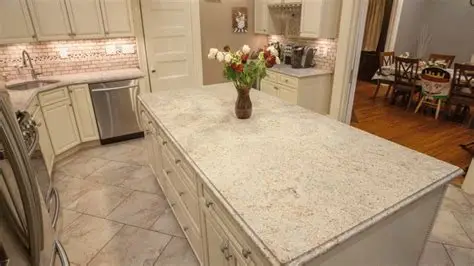
If you’ve just spotted a chip in your granite countertop, your heart probably dropped a little. Granite is known for being tough—so seeing a missing piece on an edge or around a sink can be really frustrating.
The good news:
Most chipped granite can be repaired at home with the right materials and a bit of patience.
And unlike weak sedimentary rocks like shale, which flake and crumble under stress, granite stone is strong, dense, and refinishable. That’s why repairing chips in granite is usually much easier and more cost-effective than replacing the whole countertop.
In this guide, you’ll learn:
- Why granite chips (and why shale never makes it into kitchens)
- How granite’s geology affects repair
- Step-by-step how to repair chipped granite
- When to DIY vs call a pro
- How repairs fit into long-term care: polishing, sealing, and refinishing
- How this ties into granite countertop cost and future upgrade options like Aardwolf granite
We’ll also link out to helpful cleaning and restoration resources like:
- 👉 How to get Sharpie off granite
- 👉 How to remove soap scum from granite
- 👉 How to restore granite countertops
- 👉 How to refinish granite countertops
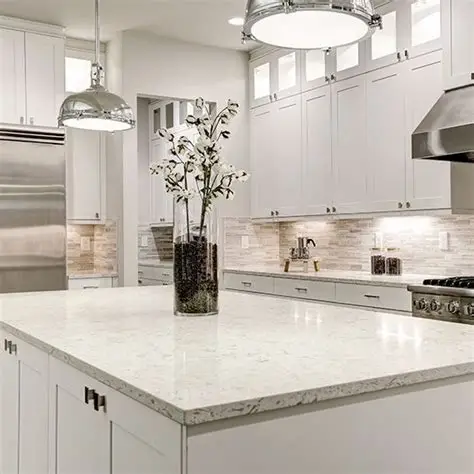
Granite Stone vs Shale: Why Granite Can Be Repaired
Granite geology and composition
Granite is an intrusive igneous rock formed when magma cools slowly below the Earth’s surface. That slow cooling creates big, interlocking crystals of:
- Quartz – extremely hard and scratch-resistant
- Feldspar – shapes most of the white, cream, grey, or pink background
- Mica & other minerals – dark flecks, veins, and sparkle
These ingredients give the key characteristics of granite:
- High compressive strength and density
- Excellent heat resistance
- Slight natural porosity (it can absorb a bit of liquid if unsealed)
- A surface that can be ground, filled, polished, and sealed again
Why shale doesn’t belong in a kitchen
Shale is a soft, layered sedimentary rock:
- It splits into thin sheets
- It crumbles and wears quickly
- It has very low strength compared to granite
It’s great in rock outcrops and geology diagrams—but it would fall apart under knives, pans, and appliances. Granite, on the other hand, is built to take a beating and still be repairable when chips happen.

Common Places Granite Chips (And What That Tells You)
Before we get into how to repair chipped granite, it helps to know where and why chips occur:
- Front edges – bumped by heavy pots, pans, or tools
- Inside sink cutouts – thin stone plus frequent contact from cookware
- Dishwasher or range edges – from installation or door impacts
- Corners – especially if something heavy was dropped or the slab wasn’t well supported
Chips in these spots don’t mean your granite is “bad.” They usually mean:
- A localized impact
- A slightly vulnerable thin edge
- Or normal wear in a busy kitchen
Because granite is solid stone, those chips can usually be filled and blended.
Step-By-Step: How to Repair Chipped Granite at Home
Step 1: Decide if you should DIY or call a pro
DIY repair works best for:
- Small chips and pits (up to a few millimeters deep)
- Shallow damage along an edge or corner
- Areas where a slightly visible repair won’t ruin the look
Call a professional if:
- The chip is large and deep
- There’s a crack extending from the chipped area
- The damage is near a seam, large overhang, or undermount sink and may indicate support issues
Pros can also help blend the repair with polishing granite surfaces so it’s nearly invisible.
Step 2: Gather materials for granite chip repair
For a typical DIY repair, you’ll need:
- Stone-safe cleaner (or mild dish soap and water)
- Rubbing alcohol (to remove any residue before filling)
- Clear or tinted epoxy kit designed for stone
- Disposable gloves and mixing sticks
- A small applicator (toothpick, plastic blade, or small spatula)
- Masking tape (to protect surrounding areas)
- Razor blade or utility blade (optional, if your kit suggests trimming)
- Fine polishing pad or cloth (if needed for final blending)
Choosing a clear epoxy works surprisingly well on many granite colors; for difficult patterns or visible edges, a color-matched kit is even better.
Step 3: Clean and prep the chipped granite
You cannot repair a chip properly if the area is dirty or greasy.
- Wash the area
Use a stone-safe cleaner or mild dish soap and warm water to remove oil, dust, and cooking residue. - Rinse and dry thoroughly
Any trapped moisture can interfere with epoxy adhesion. - Wipe with rubbing alcohol
This removes remaining grease and ensures a clean bonding surface. - Mask around the chip
Use painter’s tape around the chipped area to keep epoxy off the rest of your white granite countertop or black granite countertops.
If soap residue or mineral deposits are present (common around sinks), tackle those first:
👉 How to remove soap scum from granite
Step 4: Mix your epoxy or repair compound
Follow the instructions on your repair kit carefully:
- Mix the resin and hardener to the recommended ratio
- If your kit includes tints, add a tiny amount and mix thoroughly
- Work in small batches—epoxy can set quickly
Try to match the overall tone of your granite; it doesn’t have to be perfect, especially for very speckled stones.
Step 5: Fill the chip in the granite
Now you’re ready to actually repair the chipped granite:
- Apply epoxy into the chip
Use a toothpick or small applicator to work the epoxy into the deepest part of the chip. Avoid trapping air bubbles. - Slightly overfill
It’s better for the epoxy to be just above the granite surface; you can level it later. - Smooth the surface
Carefully smooth the top of the fill, working it to approximate the surrounding shape and edge. - Clean up excess
Wipe away any stray epoxy on the tape or surrounding stone before it sets. - Let it cure
Leave the area undisturbed for the full cure time listed on the product (this may range from a few hours to overnight).
Step 6: Level, polish, and blend
Once fully cured:
- If the kit suggests using a razor blade, carefully shave any epoxy that’s proud of the surface—always pulling the blade away from the stone, not into it.
- Use a fine polishing pad or cloth to buff the area and soften any edges between the repair and the surrounding granite.
- For larger or more visible areas, you might follow up with a professional polishing granite surfaces service to blend everything seamlessly.
Afterward, a wider restore and refinish can make the entire countertop look new again:
After the Repair: Sealing Granite and Long-Term Care
Once your chip is repaired and the surface is dry and clean, it’s a great time to think about sealing granite.
Why sealing matters after chip repair
Granite is slightly porous, and:
- Sealer helps prevent removing stains from granite later (oil, wine, coffee, etc.)
- Properly sealed stone is easier to keep as clean granite countertops
- It can help protect the repaired area too
How to seal granite:
- Ensure the surface is clean, dry, and free from tape or leftover epoxy.
- Apply a penetrating sealer evenly with a soft cloth or applicator.
- Let it soak in as directed.
- Wipe off excess and buff dry.
- Allow the sealer to cure before heavy use.
If you’ve recently had a whole kitchen restored, sealing may already be part of that process—but after any repairing chips in granite, it’s smart to check.
Cost & Value: Repair vs Replace Granite Countertops
A small chip repair is far cheaper than changing out your stone.
Granite countertop cost vs repair cost
- Repairing chips in granite
- DIY kits are relatively inexpensive.
- A professional repair visit costs much less than full replacement.
- Full replacement
- Requires new stone, fabrication, removal, and installation.
- Impacts your granite countertop cost significantly.
Unless there are structural issues (major cracks, poor support, multiple failing seams), repairing and refinishing are usually the best options—especially if you like your color and layout.
When it is time to replace, you can start exploring:
- Where to buy granite countertops
- Affordable granite countertop options vs more exotic stones
- Local wholesale granite suppliers for better selection
Design Considerations: Making Repairs Invisible in Your Overall Look
One benefit of natural stone is that its variation can help hide minor repairs.
- On a busy, speckled white granite countertop, a well-tinted chip repair often disappears into the pattern.
- On very dark black granite countertops, clear epoxy plus good polishing can make the repair nearly invisible in normal lighting.
- If you’re planning a broader makeover with granite backsplash designs and new paint or hardware, a small repair usually vanishes in the overall refresh.
When pairing granite with cabinet colors, keep undertones in mind so the stone and cabinets feel intentional—your eye will focus on the overall design, not any tiny repaired spots.
How Granite Compares to Other Countertop Materials After Damage
A chipped granite edge can make you wonder if you chose the right material in the first place. Here’s how granite stacks up:
Granite vs quartz countertops
- Granite
- Natural stone; can be repaired, repolished, and resealed.
- Excellent heat resistance.
- Quartz
- Engineered; good chip resistance but can still be damaged at edges.
- Resins can be damaged by direct high heat.
Granite vs marble: pros and cons
- Marble
- Softer; chips and scratches more easily.
- Etches from acids.
- Granite
- Harder, more chip-resistant, and less reactive.
Granite vs soapstone durability
- Soapstone
- Non-porous but soft; scratches and dents more easily.
- Granite
- Better long-term resistance to chipping and scratching.
Granite better than concrete countertops
- Concrete
- Can chip, crack, and wear; repair often more noticeable.
- Granite
- Naturally strong; chips are usually smaller and easier to repair and blend.
In most natural stone countertop comparison scenarios, granite remains one of the most forgiving and repairable options.
Aardwolf Granite: When Repair Isn’t Enough (or You’re Upgrading)
Sometimes, fixing a chip is part of a bigger plan: new island, extended bar, or a complete re-do. That’s where the Aardwolf granite ecosystem comes in.
- The Aardwolf granite countertop collection offers curated stones chosen for beauty and durability.
- Aardwolf premium granite slabs ensure consistency and structure, ideal for long spans and modern designs.
- With Aardwolf granite installation services, you get professional templating, cutting, seam planning, support, and sealing.
- The Aardwolf granite pricing guide helps you balance budget with desired quality and style.
- You can choose from many of the best Aardwolf granite colors to complement your cabinets, floors, and backsplash.
This makes it easy to combine repair and restoration on existing surfaces with carefully planned new pieces.
Can Granite Countertops Be Refinished After Chip Repair?
Yes—this is one of granite’s biggest advantages.
After you repair chipped granite, you can still:
- Deep clean the entire surface
- Professionally hone and polish to restore a uniform sheen
- Reseal everything for long-term protection
For a deeper dive into that process, check:
You’ll often see this tied into the broader question: Can granite countertops be refinished?
The answer is yes—and chip repair is just one piece of that larger maintenance picture.
Final Thoughts: Granite Chips Are Fixable
Unlike shale, which crumbles under stress, granite stone is designed by nature to be strong, repairable, and long-lasting.
To recap how to repair chipped granite:
- Inspect the chip and decide if DIY or pro repair makes sense.
- Clean the area thoroughly and remove any soap scum or residue.
- Mask around the damage and mix a stone-safe epoxy.
- Fill the chip slightly proud of the surface, then allow it to cure.
- Trim, polish, and blend the repair with the surrounding granite.
- Reseal the countertop for protection and easier future cleaning.