
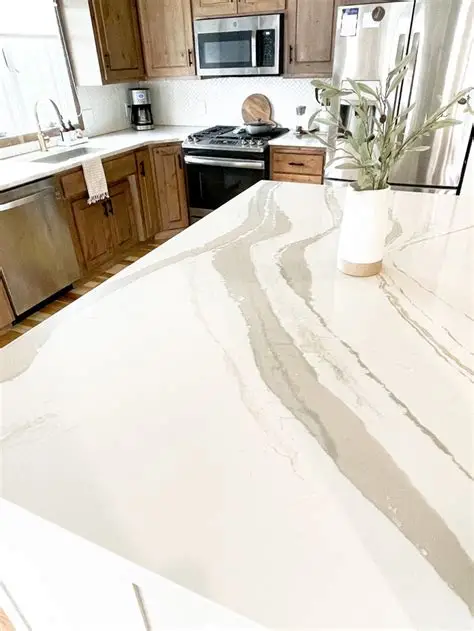
Granite is famous for being tough, elegant, and long-lasting. But even the best granite stone can start to look tired after years of use. Dull areas around the sink, faint stains, tiny chips on the edge, or a cloudy film where there used to be a mirror-like shine — sound familiar?
The good news: in most cases you don’t need to replace your countertops. With the right approach, you can restore granite countertops and bring them back to a deep, glossy, show-home finish.
This guide covers:
- How granite’s geology affects restoration
- How to diagnose what’s wrong with your surface
- Step-by-step cleaning, stain removal, repairs, polishing, and sealing
- How granite compares to other materials
- Cost, sourcing, and how Aardwolf granite products fit into your plan

Understanding Granite Stone Before You Restore It
Granite geology and composition (why it behaves the way it does)
Granite is an intrusive igneous rock formed when molten magma cools slowly deep underground. This slow cooling creates large, visible crystals of:
- Quartz – adds hardness and scratch resistance
- Feldspar – responsible for many white, cream, and pink tones
- Mica & accessory minerals – add dark flecks and subtle sparkle
These minerals create key characteristics of granite:
- Very high hardness and durability
- Excellent heat resistance
- Slight porosity (it can absorb a bit of liquid if not sealed)
- Ability to take a high, reflective polish
This combination is why granite is so popular in a natural stone countertop comparison — it balances strength, beauty, and practicality better than many alternatives.
Natural vs. engineered granite
When planning how to restore granite countertops, it’s important to know what you have:
- Natural granite stone
- Quarried in large blocks and sliced into slabs
- Slightly porous; needs sealing
- Can be honed, polished, repaired, and re-sealed many times
- Engineered “granite” / quartz
- Made from crushed stone plus resins and pigments
- Non-porous; doesn’t need sealing
- Restores differently (this article focuses on natural granite)
If you’re working with natural stone — which most classic granite kitchens use — the steps below are made for you.

Step 0: Diagnose Your Granite Countertop Problems
Before grabbing polish or sealer, spend a few minutes really looking at your counters in good light.
Common issues include:
- General dullness – shine is gone, surface looks flat or hazy
- Stains and dark spots – coffee, wine, oil, or colored food/drink marks
- Soap scum & hard water film – cloudy, chalky patches near sinks and faucets
- Chips and nicks – along edges, corners, or around sink cutouts
Knowing what you’re dealing with helps you choose the right restoration steps instead of just “cleaning and hoping.”
Step 1: Deep Clean for Truly Clean Granite Countertops
You can’t restore granite over old residue, wax, or grease. A proper deep clean is always the first step.
How to deep-clean granite safely
- Clear the surface
Remove everything: appliances, decor, cutting boards, soap bottles. - Dry dust first
Use a dry microfiber cloth to lift crumbs and grit without scratching. - Wash with a pH-neutral solution
- Mix warm water with a tiny amount of mild dish soap, or
- Use a cleaner specifically labeled safe for granite/natural stone.
Avoid vinegar, lemon, bleach, ammonia, and abrasive powders — they can dull the finish and break down the sealer.
- Rinse thoroughly
Wipe again with clean water to remove soap residue (leftover soap can cause streaks and film). - Dry completely
Buff dry with a clean microfiber towel. This reveals which marks are real damage or stains and which were just surface residue.
If you see a cloudy film in bathrooms or around the sink, it may be build-up rather than damage. For more targeted help, see this guide on
how to remove soap scum from granite.
Once the surface is truly clean and dry, move on to stains.
Step 2: Removing Stains from Granite Before You Polish
You never want to polish or seal over stains. Deal with them now, while the stone is clean and bare.
Identify the type of stain
Look closely at problem areas:
- Brownish circles or drips – often coffee, tea, or other organic stains
- Dark, greasy shadows – usually oil or fat
- Colored lines or scribbles – ink or marker (hello, Sharpie)
- Cloudy or white marks – soap scum, hard water, or mineral deposits
Different stains need different tactics. Here are some detailed guides you can use:
- Coffee and tannin stains:
How to remove coffee stains from granite - Superglue or strong adhesive spills:
How to remove superglue from granite - Permanent marker and ink mishaps:
How to get Sharpie off granite - Soap film and shower residue:
How to remove soap scum from granite
Most deep stains are treated with a poultice — a paste that sits on the stain and draws contaminants out of the pores. It can take more than one application for older or stubborn marks, but it’s worth the patience. Completely finishing removing stains from granite is what makes your later polishing step look even and professional.
Step 3: Repairing Chips in Granite and Edge Damage
Next, fix any chips or small pits. Repairing chips in granite not only improves appearance but also prevents those tiny damage spots from catching dirt and becoming more noticeable.
DIY chip repair (for small chips)
For minor chips along an edge:
- Clean and dry the chipped area thoroughly.
- Use a clear or color-matched stone epoxy kit (made for granite).
- Carefully fill the chip so it’s level with the surrounding surface.
- Let the epoxy cure fully (follow product timing).
- If the kit allows, lightly shave or sand any high spots and buff gently.
When to call a granite pro
Call a professional fabricator if:
- Chips are large, deep, or near seams
- Cracks radiate through the countertop
- Damage runs into a sink cutout or overhang
Once chips are repaired and stains are gone, your granite is ready for the “wow” stage: polishing.
Step 4: Polishing Granite Surfaces to Bring Back the Shine
Now we’re into the fun part of how to restore granite countertops — restoring that glassy, reflective finish.
Light polishing at home
If your granite is structurally sound and just a bit dull:
- Use a granite-specific polish or cream (never generic wax or furniture polish).
- Apply it in a thin, even layer, as directed on the product.
- Buff with a clean microfiber cloth in overlapping circles.
This is often enough to revive shine on:
- A white granite countertop that’s slightly lackluster, or
- Black granite countertops that have lost some of their deep, mirror-like reflection.
Professional honing and polishing
If your counters are:
- Heavily etched from past acid or harsh cleaner use
- Covered in fine scratches and worn traffic patterns
- Very uneven in gloss (shiny in some spots, flat in others)
…then professional polishing granite surfaces may be the best option. Stone restoration specialists use diamond polishing pads and water, working through multiple grits to remove micro-damage and bring back a factory-like shine.
Step 5: Sealing Granite to Protect Your Restoration
By this point your granite should be:
- Deep-cleaned
- Stain-free (or drastically improved)
- Repaired where necessary
- Nicely polished
Now you need to keep it that way. Because granite is slightly porous, sealing granite is essential to protect your hard work.
How to tell if your granite needs sealing
Use the simple water test:
- Place a teaspoon of water on the surface.
- Wait 10–15 minutes.
- If the stone darkens under the water, your sealer has worn off and it’s time to reseal.
How to seal granite countertops
- Clean the surface thoroughly and let it dry completely.
- Apply a penetrating granite sealer evenly with a soft cloth or applicator pad.
- Let it sit for the recommended dwell time so it can soak into the stone.
- Wipe off any excess sealer and buff with a dry microfiber cloth.
- Avoid getting the counters wet or heavily used until the sealer has fully cured (check the label).
After sealing, your restored clean granite countertops will be far more resistant to new stains and easier to wipe down.
Design & Style Tweaks After You Restore Granite
Once your granite is shining again, the surrounding design can either enhance or hide its beauty.
Color and pattern: white vs. black granite
- A white granite countertop brightens the space and works beautifully with modern, airy kitchens.
- Black granite countertops add drama and contrast, especially with light cabinets.
Granite backsplash designs and cabinets
To finish the look:
- Use matching granite backsplash designs (like a full-height slab) for a seamless, high-end effect.
- Focus on pairing granite with cabinet colors that complement the stone’s undertones — for example:
- White cabinets with dark granite for bold contrast
- Warm wood cabinets with mid-tone granite for a softer, classic feel
These choices showcase your newly restored surface and make the entire room feel upgraded.
Where Granite Fits in a Natural Stone Countertop Comparison
When you’ve just put effort into restoring granite, it’s natural to wonder how it stacks up against other materials.
Granite vs quartz countertops
- Granite – natural, unique patterning, needs sealing, excellent heat resistance.
- Quartz – engineered, non-porous, no sealing needed, but less tolerant of direct high heat.
Granite vs marble: pros and cons
- Marble – softer, more porous, prone to etching and staining; gorgeous but higher maintenance.
- Granite – harder, more stain-resistant, usually better for heavy-use kitchens.
Granite vs soapstone durability
- Soapstone – very stain-resistant and dense but softer; scratches and dents more easily.
- Granite – more scratch-resistant, keeps its polished finish longer under everyday use.
Granite better than concrete countertops?
- Concrete – highly porous, heavily dependent on sealers, can crack or chip.
- Granite – naturally dense, easier to maintain long-term once properly sealed.
For many households, this balance makes granite the winner in the long run.
Granite Countertop Cost, Sourcing & Aardwolf Solutions
Granite countertop cost and where to buy
Granite countertop cost depends on:
- Stone rarity and pattern
- Slab thickness and edge profiles
- Fabrication complexity (cut-outs, curves, seams)
- Regional labor rates
You can explore:
- Local fabricators and showrooms
- Wholesale granite suppliers if you want to hand-pick slabs
- Big-box stores for affordable granite countertop options in popular colors
Aardwolf granite: slabs, installation & pricing
To make the most of your restoration or a partial upgrade, consider how Aardwolf fits into the picture:
- The Aardwolf granite countertop collection focuses on structurally sound, attractive stones that perform well in kitchens and baths.
- Aardwolf premium granite slabs are selected for consistent thickness and beautiful patterning, making them ideal if you’re adding an island or replacing a damaged section to match your restored surfaces.
- With Aardwolf granite installation services, you get professional templating, cutting, seam placement, and initial sealing — all of which protect the stone and help your restoration blend seamlessly with any new pieces.
- The Aardwolf granite pricing guide helps you compare options across budgets, from entry-level to premium, and pick the best Aardwolf granite colors for your cabinets, floors, and backsplash.
Final Thoughts: Bringing Granite Back to Life
Learning how to restore granite countertops turns “maybe we need to replace everything” into “we can make this look amazing again.”
In summary:
- Deep-clean and remove build-up.
- Use targeted methods for removing stains from granite (coffee, ink, glue, soap scum, and more).
- Repair chips in granite where needed.
- Polish granite surfaces to restore depth and shine.
- Seal granite so your hard work lasts.