
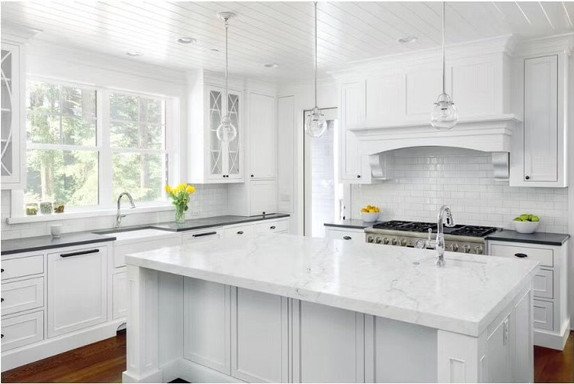
Granite countertops are one of the most durable and beautiful surfaces you can put in a kitchen or bathroom but they still need the right care to stay shiny, stain-free, and crack-free for decades.
And what about shale? You might see it mentioned in geology charts along with granite, but shale is a soft, layered sedimentary rock that would crumble in a busy kitchen. In real homes, the star is granite stone, not shale.
In this guide, you’ll learn exactly how to take care of granite countertops:
- The basic characteristics of granite and why it’s so durable
- How to clean granite countertops without damaging them
- When and how to seal granite
- What to do about stains, chips, and cracks
- How granite compares to other countertop materials
- How to get the most from premium options like the Aardwolf granite countertop collection
We’ll also link to in-depth repair guides, including:
- How to fix cracked granite
- How to fix a crack in a granite countertop
- How to repair chipped granite with superglue
- How to protect granite countertops

Understanding granite stone: geology, composition & why it lasts
Granite geology and composition
Granite is a natural igneous rock formed when molten magma cools slowly deep beneath the Earth’s surface. That slow cooling creates large, interlocking crystals of:
- Quartz – very hard and scratch-resistant
- Feldspar – controls much of the background color (white, cream, grey, pink, etc.)
- Mica & accessory minerals – add shimmer, dark flecks, and veining
This granite geology and composition explains the key characteristics of granite:
- High hardness and long-term durability
- Excellent heat resistance
- Slight porosity (so sealing is important)
- Natural, one-of-a-kind patterns
Whether you choose a light white granite countertop for an airy kitchen or bold black granite countertops for dramatic contrast, you’re working with a material that was literally forged in the earth.
Natural vs. engineered granite alternatives
Strictly speaking, granite stone is always natural. But in real showrooms you’ll see:
- Natural granite countertops – slabs cut from the quarry, polished, and sealed
- Engineered surfaces (like quartz) – crushed stone plus resins and pigments
A natural stone countertop comparison shows that granite is less uniform than engineered quartz, but more unique and more heat-tolerant. Taking care of granite is about preserving that natural beauty.

Daily care 101: how to clean granite countertops the right way
Step 1: Use granite-safe cleaners
Daily cleaning is the foundation of how to take care of granite countertops. The goal is clean granite countertops without stripping sealer or scratching the polish.
Use:
- A few drops of mild dish soap in warm water
- Or a pH-neutral, stone-safe cleaner
- Soft microfiber cloths or non-scratch sponges
Avoid:
- Vinegar, lemon, or citrus-based cleaners
- Bleach, ammonia, or harsh degreasers
- Abrasive powders and scouring pads
These can dull the finish, damage the sealer, and make the stone more prone to stains.
Step 2: Wipe spills quickly
Granite is forgiving, but not invincible. Good habits:
- Blot (don’t rub) spills like wine, coffee, oil, and tomato sauce
- Rinse with clean water
- Dry with a soft cloth to avoid water spots
This simple routine drastically lowers the chances of needing heavy-duty removing stains from granite treatments later.
Step 3: Protect against heat and scratches
Even though granite is tough, it still deserves respect:
- Use trivets or hot pads under very hot pots and pans
- Use cutting boards rather than chopping directly on the surface
- Don’t drag cast iron, appliances, or gritty objects across the stone
You’ll protect both the granite and your knives.
Sealing granite: the key to long-term protection
Why sealing granite matters
Because granite is slightly porous, unsealed areas can absorb:
- Oils and grease (which darken the stone)
- Dark liquids (wine, coffee, cola)
- Water that can leave rings or marks
A good penetrating sealer:
- Reduces absorption dramatically
- Gives you extra time to wipe spills
- Keeps lighter surfaces—especially a white granite countertop—looking fresh
How to tell if your granite needs sealing
Try this simple water test:
- Place a few drops or a small puddle of water on the granite.
- Let it sit for 10–15 minutes.
- Wipe it away and check the stone underneath.
If the area has darkened, water has been absorbed and it’s time for sealing granite again.
How to seal granite countertops (basic steps)
- Clean the countertop thoroughly and let it dry completely.
- Apply a stone sealer evenly with a soft cloth or applicator pad.
- Let it dwell for the time specified on the product label.
- Wipe off any excess and buff the surface with a clean microfiber cloth.
Most kitchens do well with sealing every 1–3 years, depending on the stone’s density and how heavily the surface is used.
Stains, chips & cracks: caring for damaged granite countertops
Even with great care, real life happens. Knowing what to do next is part of taking care of granite.
Removing stains from granite
If you do get a stain:
- Act as soon as you notice it
- Use a stone-safe stain remover or poultice for oil, coffee, or wine
- Avoid harsh chemicals that could etch or discolor the stone
Because granite is dense, many stains are only in the sealer layer and can be pulled out with the right product.
Repairing chips in granite
Chips tend to appear on:
- Sharp outside corners
- Edges near dishwashers or sinks
- High-traffic island corners
Small chips are often fixable with:
- Color-matched epoxy or resin
- Careful filling, leveling, and polishing granite surfaces
For a DIY approach, see:
How to repair chipped granite with superglue
Fixing cracked granite
Cracks vary from hairline to structural. The right response depends on:
- Whether there’s movement in the crack
- Whether the crack crosses a seam or unsupported span
- Whether it’s cosmetic or affecting the stability of the top
Useful in-depth resources include:
In many cases, a professional stone technician can stabilize and disguise cracks, saving you from a full replacement.
Protecting granite countertops from future damage
Once your stone is repaired, you’ll want to prevent repeat issues. A good overall prevention guide is:
How to protect granite countertops
Design, cost & smart choices: making granite easier to live with
Granite countertop cost & where to buy
Your granite countertop cost depends on:
- The stone you choose (common patterns vs rare exotics)
- Thickness (2–3 cm is typical)
- Edge profile (simple eased vs decorative)
- Layout complexity and number of cutouts
You can source granite through:
- Local fabricators and showrooms
- Kitchen & bath dealers
- Big-box retailers
- Fabricators that work directly with wholesale granite suppliers
By choosing affordable granite countertop options, you can get premium performance without blowing the budget.
Granite backsplash designs & layout choices
Some design decisions also make care easier:
- Full-height granite backsplash designs protect walls and seams from water and stains
- Slightly rounded edges are less prone to chipping than sharp, square profiles
- Seam placement away from high-stress zones (like sink cutouts) reduces crack risk
Thoughtful design now means less repairing chips in granite later.
Pairing granite with cabinet colors
Good design is part of “care,” too, because surfaces last longer when you still love them:
- Cool-toned granites pair beautifully with whites, greys, and modern slab cabinets
- Warm-toned stones look great with wood cabinets and warmer paints
- Black granite countertops can anchor light cabinets and brighten open spaces
A timeless look means you won’t swap countertops just to chase trends.
Granite vs other materials: why care is simpler than you think
Granite vs quartz countertops
Both require basic daily cleaning, but:
- Granite is natural, heat-resistant, and can be re-polished if scratched or dulled.
- Quartz is engineered, doesn’t need sealing, but is more sensitive to high heat.
In a natural vs. engineered granite comparison, granite wins for uniqueness and heat resistance, while quartz wins for stain resistance.
Granite vs marble: pros and cons for care
- Marble is softer and more prone to etching from acids, so it needs more delicate care.
- Granite is harder, more scratch-resistant, and more forgiving of small cleaning mistakes.
In most active kitchens, granite vs marble: pros and cons tilts strongly toward granite for ease of maintenance.
Granite vs soapstone durability
- Soapstone is non-porous and doesn’t stain easily, but it scratches and dents more readily and is typically oiled, not polished.
- Granite keeps a high-gloss finish longer and resists scratching better.
Granite better than concrete countertops
Concrete may look industrial-chic, but:
- It’s prone to cracks, staining, and repeated sealing
- It can be more sensitive to household acids and cleaning chemicals
For most homeowners, granite better than concrete countertops in terms of both daily care and long-term durability.
Aardwolf granite: when you want stone that’s worth caring for
If you’re going to invest time in caring for your countertops, it makes sense to start with high-quality stone.
Aardwolf granite countertop collection
The Aardwolf granite countertop collection focuses on:
- Carefully selected Aardwolf premium granite slabs for superior strength and beauty
- A curated palette of the best Aardwolf granite colors, from subtle neutrals to bold statement stones
Aardwolf granite installation services & pricing guide
With Aardwolf granite installation services, you get:
- Professional templating to ensure proper support and fewer stress points
- Expert seam placement and edge finishing to reduce the risk of chips and cracks
- Guidance on sealing, cleaning, and ongoing maintenance from day one
The Aardwolf granite pricing guide helps you:
- Understand how color, thickness, and edges affect price
- Compare different stones and affordable granite countertop options
- Balance upfront cost with long-term durability and care requirements
Simple checklist: how to take care of granite countertops every day
To wrap up, here’s a quick granite care checklist you can follow:
- ✅ Clean daily with mild, stone-safe products
- ✅ Blot spills quickly, especially oil, wine, coffee, and tomato sauces
- ✅ Use cutting boards, trivets, and coasters
- ✅ Test and seal granite regularly (every 1–3 years)
- ✅ Avoid harsh chemicals and abrasive pads
- ✅ Address chips and cracks early using resources like: