
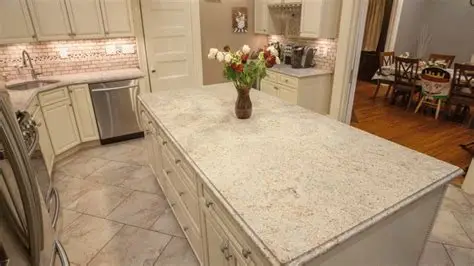
When remodeling a kitchen or bathroom, homeowners often face the classic countertop debate: quartz vs. granite. Both materials are beautiful, durable, and highly sought after, yet they have important differences that affect design, maintenance, and long-term value. This guide explains how to distinguish between quartz and granite, exploring their unique features, costs, and style options.
What is Granite?
Granite Stone Origins
Granite stone is a natural igneous rock formed when magma cools slowly beneath the Earth’s surface. Its geology and composition include quartz, feldspar, and mica, which give it distinctive colors and veining. Because each slab forms naturally, no two granite countertops are alike.
Large blocks of granite are extracted from quarries, often with heavy-duty block lifting equipment, before being cut, polished, and fabricated into countertops.
Characteristics of Granite
- Naturally unique patterns and textures
- Heat and scratch resistance
- Requires sealing to prevent stains
- Comes in timeless styles such as white granite countertops and black granite countertops

What is Quartz?
Quartz countertops, on the other hand, are engineered stone surfaces made of about 90–95% ground quartz crystals combined with resins and pigments. Unlike granite, which is purely natural, quartz is manufactured for uniformity.
Key characteristics of quartz countertops:
- Non-porous and stain-resistant
- Consistent color and pattern
- Requires little to no maintenance
- Available in a wide range of shades, including styles that mimic marble
Quartz vs. Granite: How to Tell Them Apart
Appearance
- Granite: Look for natural, unpredictable veining, speckles, and mineral deposits.
- Quartz: More uniform in design, often with repetitive patterns.
Porosity and Maintenance
- Granite: Needs sealing regularly. See more in What Are the Cons/Disadvantages of Granite Countertops?
- Quartz: Non-porous, requires less maintenance.
Durability
Both materials are durable, but granite has higher heat resistance, while quartz is more stain-resistant.
Cost: Which is More Expensive?
One of the most common homeowner questions is about price.
- Granite countertop cost: $40–$200 per square foot
- Quartz countertop cost: $50–$150 per square foot
So, What’s More Expensive, Quartz or Granite? The answer depends on the grade and origin of the stone. Entry-level granite can be cheaper, but rare granite varieties may cost more than quartz.
For budget-conscious buyers, check:
Granite vs. Quartz Countertops: Pros and Cons
Pros of Granite
- 100% natural
- Unique look
- High heat resistance
- Long lifespan with proper care
Cons of Granite
- Requires sealing
- Can chip at edges
- Porous without treatment
Pros of Quartz
- Consistent appearance
- Stain-resistant and easy to maintain
- Wide color range
Cons of Quartz
- Less heat-resistant
- May look too uniform for some tastes
Style and Design Options
Granite’s natural beauty means each slab is unique, making it ideal for granite backsplash designs or for pairing granite with cabinet colors. From rustic kitchens to luxury baths, granite adapts beautifully.
Quartz, by contrast, offers modern consistency, perfect for homeowners seeking sleek, minimalist aesthetics.
Comparing Granite with Other Stones
Homeowners often compare granite with other natural stones:
- Granite vs. marble: Granite is harder and less porous.
- Granite vs. soapstone durability: Granite is scratch-resistant, while soapstone is softer but highly heat-resistant.
- Granite better than concrete countertops: Granite generally outperforms concrete in durability and maintenance.
For more on style trends, check Is Granite Countertops Out of Style?. Spoiler: granite remains a timeless classic.
Aardwolf Granite Solutions
At Aardwolf, professionals and homeowners can find top-quality granite solutions. The Aardwolf granite countertop collection includes a wide selection of premium granite slabs, supported by granite installation services, and an Aardwolf granite pricing guide to help you choose the best option for your project.
From the best Aardwolf granite colors to innovative lifting and fabrication tools, Aardwolf ensures safety, efficiency, and excellence at every step.
Final Thoughts
So, quartz vs. granite: how to tell? The key is understanding that granite is a unique, natural stone with distinctive veining and patterns, while quartz is engineered for consistency and easy maintenance.
- Choose granite if you want natural uniqueness, timeless appeal, and higher heat resistance.
- Choose quartz if you prefer a low-maintenance, stain-resistant option with modern, uniform looks.
Both remain excellent investments that add beauty, durability, and value to your home.